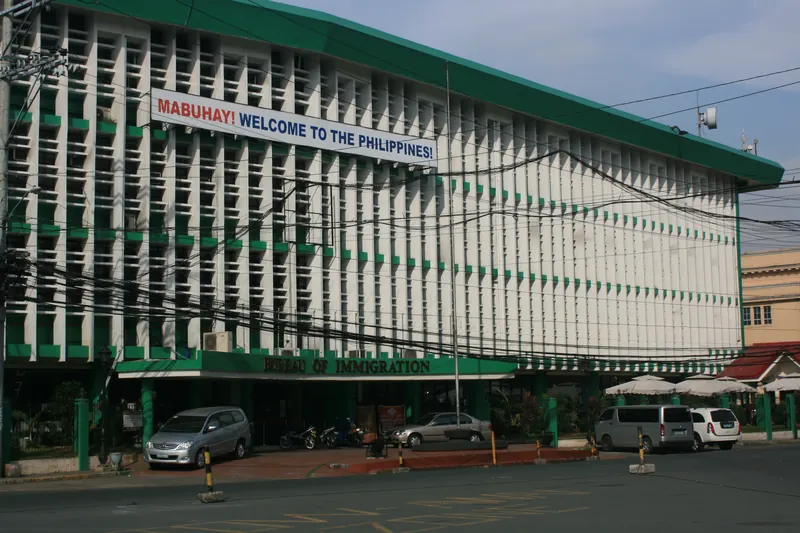
BI Cebu moved out of Mandaue in January 2024. The new district office is on the 4th floor of GMall of Cebu, A. Soriano Avenue, North Reclamation. The address moved, and so did the process. A tourist extension is widely described as an in-person, cash-only errand (BI’s own Citizen’s Charter now documents an online channel), that every foreigner files an annual report (BI excepts tourists outright), and that the SRRV pays for itself in two years (PRA’s annual fee says otherwise).
This guide covers every realistic long-stay path for expats in Cebu: the 9(a) tourist rolling extension, the Digital Nomad Visa, the restructured SRRV, the investor SIRV, the 13(a) spousal visa, the 9(g) work visa, and the 9(f) student visa. Every peso and dollar figure below is rendered from the fee tables the Bureau of Immigration, the Philippine Retirement Authority and the Board of Investments actually publish, and where they publish nothing, this page says so instead of guessing.
Which visa should you actually apply for?
Your visa depends on two inputs: how long you plan to stay, and where your money comes from. Short and medium stays under 36 months work on rolling tourist extensions. Permanent setups with a Filipino spouse use the 13(a). Retirees who want permanence use the restructured SRRV. Remote workers with foreign income have the Digital Nomad Visa. If the money is going into a Philippine business rather than a bank, the SIRV is the one built for that. Employer-sponsored hires use the 9(g). Everything else routes through the student visa.
| Visa | Best for | Validity | Year 1 cost |
|---|---|---|---|
| 9(a) Tourist + extensions | Stays under 36 months | Rolling, 36 months max | PHP 22,600–24,100 in BI fees |
| Digital Nomad Visa (DNV) | Remote workers earning USD 24K+/yr | 1 year, renewable once | DFA processing + health insurance |
| SRRV Classic | Retirees 40+ wanting permanence | Indefinite, multiple-entry | USD 1,500 fee + USD 15,000–50,000 deposit |
| SIRV (investor) | Investors backing a Philippine business | Indefinite once the deposit converts | USD 300 fee + USD 75,000 invested |
| 13(a) Spousal | Married to a Filipino citizen | 1-year probationary, then permanent | PHP 15,000–30,000 in BI fees |
| 9(g) Pre-arranged Employment | Hires at a Cebu employer | 1–3 years, tied to that employer | Employer shoulders the cost |
| 9(f) Student | Enrolled at a CHED, DepEd, or TESDA school | 1 year, renewable | USD 250–400 plus school fees |
Pick your visa by what is actually true about your life, not by what sounds best. A 55-year-old retiree with a pension and no Filipino spouse should not be running rolling tourist extensions for 36 months and then discovering the ceiling. A remote worker on a six-month Cebu trial should not be locking up USD 15,000. Most expat regret at BI comes from the wrong visa, not from the rules.
Tourist visa (9A): the rolling extension path
This is the default for most expats in their first year in Cebu. Visa-exempt nationals under Executive Order No. 408 (most Western countries, ASEAN, Japan, Korea, and around 150 others) get 30 days on arrival for free. From there you extend in stages: a 29-day visa waiver to reach 59 days, then a 2-month extension that triggers the ACR I-Card, then further extensions, up to a combined 36 months. Visa-required nationals are capped at 24 months, and the cap is counted from your latest recorded arrival under Immigration Memorandum Circular No. SBM-2013-003.
The fee ladder, as BI publishes it
These are BI’s own published totals for an adult (16+) non-visa-required national. Two things about them matter more than the numbers themselves. First, each total already includes the express-lane fee — BI publishes no non-express total, so “skip the express lane and pay less” is not a thing you can source. Second, BI dates its whole fee schedule to 2014 and disclaims it, which is why every figure below carries that vintage stamp with it.
- Visa waiver, days 31–59: ₱3,030 (Visa waiver (initial 29-day extension, completing the 59-day initial stay), 29 days) (Philippine Bureau of Immigration, BI's published schedule, vintage 06 Mar 2014 — BI states fees "may change without prior notice")
- First extension beyond 59 days: ₱4,900 (First extension of authorized stay beyond 59 days, 2 months) (Philippine Bureau of Immigration, BI's published schedule, vintage 06 Mar 2014 — BI states fees "may change without prior notice")
- ACR I-Card, triggered once your stay exceeds 59 days: $50 + ₱500 (ACR I-Card, issuance) (Philippine Bureau of Immigration, BI's published schedule, vintage 06 Mar 2014 — BI states fees "may change without prior notice")
- Subsequent regular extension: ₱2,930 (Subsequent regular extension, 2 months) (Philippine Bureau of Immigration, BI's published schedule, vintage 06 Mar 2014 — BI states fees "may change without prior notice")
- The extension that falls on your 7th month of stay: ₱4,340 (Extension falling on the 7th month of stay, 2 months) (Philippine Bureau of Immigration, BI's published schedule, vintage 06 Mar 2014 — BI states fees "may change without prior notice")
- Long-Stay Visitor Visa Extension (LSVVE), 6 months in one payment: ₱11,500 (Long Stay Visitor Visa Extension (LSVVE), 6 months) (Philippine Bureau of Immigration, BI's published schedule, vintage 06 Mar 2014 — BI states fees "may change without prior notice")
Run that ladder on a two-month cadence and a first year from a visa-free arrival comes to about PHP 22,600 to 24,100, including a small allowance for photocopies, photos, and transport to GMall, plus the ACR I-Card. A full continuous 36 months lands around PHP 64,000 to 71,000, roughly PHP 21,000 to 24,000 a year. The verified envelope is wider than that: PHP 56,220 if you take every extension as a two-month block, PHP 89,030 if you take them all as one-month blocks. The LSVVE route sits at about PHP 72,030 and buys you five office transactions instead of seventeen.
If you have read a figure like “PHP 40,000 to 55,000 a year” elsewhere, including in an earlier version of this page, it was roughly double BI’s own arithmetic.
You do not have to queue
BI’s Citizen’s Charter 2025 (1st Edition) documents a full e-service: “Extension of Temporary Visitor’s Visa (TVV) Through Online System (E-Services)”, covering 1-month, 2-month and 6-month extensions, filed at e-services.immigration.gov.ph and paid online. The Charter names exactly two payment channels for it: Landbank of the Philippines (Link.Biz) and Maya. The approval, the Official Receipt, and the BI Clearance Certificate come back by email.
Three conditions gate the online route, all from the Charter’s own eligibility text: your authorised stay must not have expired, your passport must have more than six months of validity, and your total stay must be inside the 24-month or 36-month cap. Overstayers are routed to the counter. Visa-free arrivals must take the visa waiver as their first extension.
Two things we will not tell you, because BI does not publish them: whether GCash works for a 9(a) extension (the Charter names only Landbank and Maya for this transaction; GCash appears elsewhere in BI’s material, for the annual report), and what tender the cashier at GMall accepts. The “cash only” line that circulates in every Cebu expat group, this article included until now, is a field report. BI has never published it.
What to bring if you do go in person
A valid passport with 6+ months validity, photocopies of the biodata page and your most recent entry stamp, your Cebu address for the form, and enough cash to be safe rather than sorry. The 4th-floor GMall office enforces a neat dress code, and shorts and flip-flops get turned away on busy days. Arrive at 9 AM on a Tuesday, Wednesday or Thursday for the shortest queues; Monday mornings and any Friday are the worst. All of that is observed, not published.
The ACR I-Card
Stays longer than 59 days trigger a mandatory Alien Certificate of Registration Identity Card, a biometric resident ID issued by BI. It is priced by BI in dollars ($50 + ₱500 (ACR I-Card, issuance) (Philippine Bureau of Immigration, BI's published schedule, vintage 06 Mar 2014 — BI states fees "may change without prior notice")) and is payable alongside your first extension past the 59-day mark. You need it for most banking at BPI, BDO, Metrobank and Security Bank, for driver license conversion at LTO, and for every subsequent BI transaction. The first-month Cebu setup checklist sequences what you can and cannot do while you wait for it.
The 9(a) is for temporary visitors only. Working for a Philippine-registered company on a tourist visa is illegal and triggers deportation plus a permanent blacklist if BI catches it. If a Cebu employer is paying you in pesos, you need a 9(g). Walk away from any local job offer that asks you to “just stay on a tourist visa for now”.
Overstay penalties, the voluntary turn-in path, and the fee ladder tier by tier: Overstay and Visa Extension at BI Cebu (2026).
Digital Nomad Visa: the newest option for remote workers
The DNV was created by Executive Order No. 86, signed on 24 April 2025, and entered its pilot at the DFA e-visa portal in June 2025. It is the first Philippine visa designed for location-independent remote workers with foreign income. Holders get 1 year of stay, renewable once, with multiple-entry privileges, and applications run through evisa.gov.ph.
Requirements: 18 or older, a passport valid at least 6 months beyond the intended stay, proof of remote work performed using digital technology, proof of sufficient foreign-sourced income (bank statements plus contracts), a clean criminal record, and health insurance valid for the full DNV period. You also need citizenship in a country that offers a reciprocal digital nomad visa to Filipinos and where the Philippines maintains a Foreign Service Post.
Read that income line carefully, because it is where nearly every DNV write-up overstates its sourcing. We read Executive Order No. 86 in full this month. The Order contains no dollar figure. Its actual wording is that the applicant “must show proof of sufficient income which is generated outside the Philippines” — it leaves the number to the implementing agencies. The USD 24,000 per year quoted across the internet, on this page included, is DFA implementing guidance rather than statute. That is not a reason to discount it; it is the working figure and you should budget to it. It is a reason to confirm it with the Post handling your file instead of treating it as fixed law, because guidance can move without the Order underneath it changing at all.
The DNV is applied for abroad, not at the GMall office. Budget health insurance separately; the cost of healthcare in Cebu guide covers what a compliant policy actually needs to include locally, and we would rather point you there than invent a premium range.
One thing that confuses people: Philippine tax residency and your visa status are separate questions. Any foreign national physically present in the Philippines for more than 180 days in a calendar year can be treated as a tax resident under the BIR framework, but foreign nationals are taxed only on Philippine-sourced income either way. Foreign-client income is not Philippine-sourced. The tax guide for foreigners in Cebu works through where the line actually falls.
SRRV: the retiree visa after the September 2025 restructure
The Philippine Retirement Authority restructured the SRRV effective 1 September 2025. SRRV Smile and SRRV Human Touch were closed to new applicants; only SRRV Classic and SRRV Courtesy remain. The minimum age dropped from 50 to 40. The application fee is now $1,500 (SRRV Classic 50+ (pension) application fee) (PRA published SRRV fees, 14 Apr 2026). And a BI Clearance Certificate joined the required document list, which you obtain from the Bureau of Immigration before filing with PRA. Existing Smile and Human Touch holders are grandfathered and renew normally.
The bank deposit you park in a PRA-accredited Philippine bank depends on your age and pension status:
| SRRV Classic tier | With pension | Without pension |
|---|---|---|
| Age 50 and above | USD 15,000 | USD 30,000 |
| Age 40 to 49 | USD 25,000 | USD 50,000 |
SRRV Courtesy is the cheaper route for retired foreign diplomats and military, and for former Filipinos. PRA’s published Courtesy schedule sets the deposit at USD 1,500 for a pensioned applicant aged 50+, USD 3,000 for a non-pensioned applicant aged 50+, and USD 6,000 for a non-pensioned applicant aged 40 to 49. PRA does not enumerate the 40-to-49-with-pension cell on that page, and we are not going to interpolate it for them. If that is your cell, ask PRA in writing before you move money.
Dependents have their own math, and the deposit increment is the part that trips people up. Each joining dependent costs a USD 300 application fee. The deposit rises by USD 15,000 per dependent beyond the second, not per dependent, so a 50-year-old pensioner bringing a spouse and one child still parks the same USD 15,000 principal deposit. A third and fourth child would add USD 30,000. Former Filipinos are exempt from the per-dependent deposit increment.
The SRRV does not save you money
This is where an earlier version of this page misled, and the correction is worth stating plainly. PRA’s annual fee for SRRV Classic is $360 (SRRV Classic 50+ (pension) annual fees) (PRA published SRRV fees, 14 Apr 2026), covering the principal and up to two dependents, with USD 100 a year for each additional dependent. Convert that at the current BSP reference rate (₱62.49/USD (BSP RERB, 10 Sep 2026), from our FX rates dataset) and PRA’s recurring cost sits in the same range as a full year of two-month tourist extensions. There is no year in which the SRRV’s running cost quietly undercuts the 9(a); on top of it you have paid USD 1,500 once and locked up USD 15,000 or more.
So the SRRV is not a savings play. What it actually buys is real, and it is worth paying for if you need it:
- Permanent, multiple-entry residency with no 36-month ceiling and no rolling extensions
- Exemption from the BI annual report and from the ACR I-Card (PRA’s own SRRV benefits page states both), and from BI exit and re-entry permits
- The legal right to work or run a business in the Philippines
- The deposit convertible into a long-term condo lease or eligible real estate after a 30-day waiting period, for Classic holders
The right profile is someone 40 or older who intends to be in Cebu past the tourist ceiling and wants to stop transacting with BI. The wrong profile is someone doing arithmetic on extension fees.
The SRRV is not a free pass on compliance either. Holders renew their PRA ID annually with PRA, and foreigners still cannot own land. You can own a condo unit within the 40 percent foreign quota in a building, and you can lease a house and lot for up to 50 years. Building on that leased lot is legal and common, and what it costs to build a house in Cebu prices it. Anyone selling you the SRRV as a path to land ownership is wrong.
Full cost breakdown, the BI Clearance Certificate step, and the deposit-to-property conversion rules: SRRV Philippines 2026 Process.
SIRV: the investment path nobody in Cebu talks about
The Special Investor’s Resident Visa is close to invisible in Cebu expat advice, which is a shame, because it sits in a gap the other visas leave wide open: indefinite residence with no age floor beyond 21, no Filipino spouse, no employer, and no pension. What it wants instead is capital parked in an operating business.
The Board of Investments runs it under Book V of the Omnibus Investments Code (Executive Order No. 226). BOI’s own published Q&A sets the terms, and they are considerably more specific than the summaries floating around:
| Item | What BOI publishes |
|---|---|
| Minimum investment | USD 75,000, remitted inward |
| Minimum age | 21 |
| Status you must already hold | A 9(a) tourist visa with at least 1 month validity left |
| Where the money lands first | A peso time deposit at Development Bank of the Philippines, Makati branch |
| Application fee | USD 300 for the principal, USD 300 per dependent |
| Probationary visa | 6 months (180 days) to convert the deposit into the investment |
| Late-conversion penalty | PHP 1,000 plus PHP 100 per day late |
| Qualified dependents | Spouse, plus unmarried children under 21 |
| SIRV ID card | PHP 2,000 per person, valid 1 year (3 years for BOI/PEZA/SBMA-registered or listed-company investments) |
The structure is two-stage. You remit at least USD 75,000 into a DBP time deposit, BI issues a probationary SIRV good for six months, and inside that window you convert the deposit into shares in an eligible Philippine company. Convert cleanly and the probationary visa becomes an Indefinite SIRV. Miss the window and you are paying PHP 100 a day. BOI suggests converting a month early to leave room for the paperwork, which is the sort of advice an agency only writes down after watching people cut it fine.
Two features are unusually good if you qualify. There is no residency obligation at all — BOI states plainly that keeping Indefinite status requires no minimum physical presence, only that the investment subsists and the annual report to BOI gets filed. And the SIRV ID card is presented in lieu of the ACR I-Card, and is grounds for exemption from the Special Return Certificate and the Emigration Clearance Certificate. That last one quietly deletes the airport ECC trap described further down this page.
One sign of the Q&A’s vintage: it still names the priority-areas list by its older title, the Investment Priorities Plan. Ask the Incentives Administration Service for the current list rather than working from the document’s own.
The right profile here is narrow. Someone who genuinely intends to hold a stake in an operating Philippine business, has USD 75,000 that can sit in equity indefinitely, and wants residence to follow the investment rather than the reverse. If the business is the point and the visa is the by-product, the SIRV is well designed for you. If the visa is the point, note the asymmetry: the SRRV deposit is refundable and the SIRV equity is not.
13(a) spousal visa: if you married a Filipino
The 13(a) is the non-quota immigrant visa for foreigners legally married to Filipino citizens. There is no annual quota, so any qualifying applicant from a country with a reciprocity agreement with the Philippines can apply, which covers most Western countries and ASEAN neighbours. It is a two-tier system: a 1-year probationary 13(a) first, then conversion to permanent status.
The core documents are a PSA-issued marriage certificate, a joint letter of request signed by both spouses, BI Form CGAF-001, passport biodata, proof that your spouse is a Filipino citizen, and proof you will not become a public charge. Both spouses appear at BI for the interview, fingerprinting and document verification. Processing typically takes 2 to 3 months. Our visa ledger carries the BI and legal cost at ₱15,000–₱30,000 (13(a) Spousal application fee) (LiveInPH editorial estimate, not a published Philippine Bureau of Immigration fee, 14 Apr 2026).
Treat that band as contested. Our own dedicated 13(a) guide reports higher real-world totals once lawyer assistance and document authentication are included, and BI does not publish a single all-in 13(a) figure the way it publishes the 9(a) ladder. Where the two disagree, the dedicated guide has the closer view of what people actually pay, and the honest answer is that the spread is real.
One shortcut is often missed. If your Filipino partner is a former Filipino citizen who naturalised abroad, you can both enter on the Balikbayan privilege, which grants a 1-year visa-free stay on arrival provided you enter together and your passport is from a listed country. That is a free year in which to prepare the 13(a) paperwork at PSA and at BI Cebu.
Both probationary and permanent 13(a) holders file the BI annual report. There is no permanent-resident exemption anywhere in BI’s published text, whatever you may have read.
9(g) work visa: if a Cebu employer sponsors you
The 9(g) Pre-arranged Employment Visa is the legal path for foreigners employed by a Philippine company. Cebu has a deep BPO and tech sector, and Accenture, Concentrix, JPMorgan, Sutherland, TaskUs, Foundever, Optum and several fintech firms hire non-Filipino specialists into Cebu offices, mostly in IT Park. Tech leads, architects and senior management hires usually come in on 9(g) sponsorship. The visa is tied to the sponsoring employer: resign, get terminated, or move to a materially different role and you go through a visa downgrading before the next employer can file its own.
The application still has two sequential parts. First the employer files for an Alien Employment Permit (AEP) with DOLE. Under DO 248 the labour market test means publishing the vacancy and the foreign national’s name in a newspaper of general circulation, on PhilJobnet, and with the Public Employment Service Office. The application then goes in no earlier than 15 calendar days after publication, and within 15 calendar days of the employment contract being executed — replacing the old 10-working-day window, and now permitting filing while the hire is still outside the country. Corporate officers named in the company’s registration documents skip the publication step. DO 248 also requires an Understudy Training Program or Skills Development Program transferring the role’s skills to at least 2 Filipino understudies. Second, the 9(g) itself is filed with BI, and Cebu filings go through the GMall district office. If you need to start work before the 9(g) is stamped, the employer files with BI for a Provisional Work Permit (PWP), which lets you work legally while the 9(g) moves. Neither DOLE nor BI publishes an end-to-end clock for any of this, so any week-count you see, including the ones this article used to print, is practitioner folklore rather than a published service standard.
DO 248 layered an Economic Needs Test on top of the labour market test, and failing either is a ground for refusing the AEP. What the ENT actually measures is the open question. No DOLE material we could reach states its thresholds, which industries it bites on, or how an employer is supposed to demonstrate it. So: it exists, it can sink an application, and we cannot tell you how it is scored. Neither can anyone else right now, whatever their page implies.
The penalties moved too. AJA Law’s summary of the Order reports a maximum fine of PHP 10,000 for each prohibited act, and a 10-year bar on further applications where an application is found to be fraudulent. That is a sharply harsher regime than the rules it replaced, and it is the reason to care whether your employer’s paperwork describes your actual job.
On capitalisation, we will report the residual honestly rather than resolve it for you. Older guides quote a USD 200,000 paid-up capital floor for the sponsoring company; newer DOLE and SEC materials describe a PHP 10 million threshold, with sector-specific exemptions. Either way, a tiny Cebu startup cannot sponsor you. Larger employers run the AEP and 9(g) through HR or immigration counsel, so the practical tip is simple: get it in writing that the employer will file and pay for both, and will supply the PWP bridge if needed. A small employer pushing that cost or that timeline onto you is a warning sign, not a negotiation.
9(g) holders file the BI annual report.
Student visa (9F) and the Special Study Permit
The 9(f) student visa is open to foreign nationals 18 or older enrolling in a course above high school level at an institution recognised by CHED, TESDA, or DepEd. Cebu has a large English-teaching school sector, and some of those schools (3D Academy in Mabolo is a long-standing example) sponsor student visas for long-stay English learners. Programs under 1 year can use the lighter Special Study Permit instead.
A 9(f) takes roughly 4 to 10 weeks depending on the school and your nationality. You need an acceptance letter, a valid passport, home-country police clearance, medical exam results, proof of funds, and authenticated transcripts. Our ledger carries the visa fee at $250–$400 (9(f) Student application fee) (LiveInPH editorial estimate, not a published Philippine Bureau of Immigration fee, 14 Apr 2026); tuition is separate and varies widely by school.
This is the underrated long-stay side door. A year-long English program or a part-time university course gives you legal status, a student ID, and none of the 36-month tourist ceiling. It suits people who want off the extension treadmill without qualifying for the SRRV or the DNV.
Where to process visas in Cebu: the GMall BI office
The Bureau of Immigration Cebu District Office relocated from Mandaue to 4th Floor, GMall of Cebu (Gaisano Mall of Cebu), A. Soriano Avenue, North Reclamation Area, Cebu City 6014 in January 2024; the official BI relocation notice is the announcement. This is the office for every BI transaction Cebu expats need: extensions, ACR I-Card issuance and replacement, annual reports, visa conversions, and ECC applications.
A satellite BI office at the Gaisano Mactan Island Mall Annex Building, Pajo, Lapu-Lapu City handles routine extensions for the Mactan side, with a narrower service menu and materially shorter queues. For anything beyond a routine extension (a new ACR I-Card, visa downgrading, 13(a) or 9(g) processing, an ECC issued in advance) go to GMall, not Mactan. Use your lease contract as proof of address on every form.
What it costs and how long it takes
The peso figures are in the fee ladder above. On timing, nothing in this paragraph is published by BI and all of it is observed: a waiver extension is usually 1 to 2 hours at the counter, a first extension with the ACR I-Card capture is 1 to 3 hours, and a subsequent extension is 30 minutes to 90 minutes. Arrive at 9 AM, or about 90 minutes before closing when staff are pushing the last batch through. Midweek beats Monday or Friday. And do not budget an extra express-lane fee on top of the totals above; BI’s published totals already contain it.
The compliance calendar nobody explains
Three recurring obligations exist, and which of them apply to you depends entirely on your visa class. This is the single most-garbled area in Cebu expat advice, so here is the matrix as BI and PRA actually publish it.
| Visa class | BI annual report | ACR I-Card | ECC on exit |
|---|---|---|---|
| 9(a) Tourist | Not required — BI excepts tourist visa holders by name | Required once stay exceeds 59 days | ECC-A required if you stayed 6+ months |
| 13(a) probationary | Required | Required (Probationary Resident) | ECC-B on temporary departure |
| 13(a) permanent | Required — there is no permanent-resident exemption | Required (Permanent Resident) | ECC-B on temporary departure |
| 9(g) Employment | Required | Required (Worker) | ECC-B on temporary departure |
| SRRV | Exempt — PRA exempts holders outright | Exempt (BI treats SRRV as a voluntary registrant) | PRA exempts holders from BI exit/re-entry permits |
| SIRV | Annual report goes to BOI, not BI | SIRV ID card is presented in lieu of the ACR I-Card | SIRV ID is grounds for ECC and SRC exemption |
| Digital Nomad Visa | UNVERIFIED — BI publishes no rule | UNVERIFIED — DNV is absent from BI's category table | UNVERIFIED |
The annual report is filed between 01 January and 01 March each year by the classes marked above. The fee is ₱310 (BI Annual Report) (Philippine Bureau of Immigration, BI's published schedule, vintage 06 Mar 2014 — BI states fees "may change without prior notice"). Miss it and you pay a PHP 1,510 Motion for Reconsideration plus PHP 200 per month of delay, reckoned from 2 March and capped at PHP 2,000 a year (Operations Order No. 2025-007). BI’s published service is a personal appearance, and BI’s own annual report page points you to e-services.immigration.gov.ph to register online and secure a reference number before visiting a physical office. BI’s January 2026 advisory also describes a virtual annual report accessible 24/7 with payment by Maya, GCash, credit card or Landbank. That route is not the same price: BI Operations Order No. 2025-007 adds a PHP 1,000 express lane fee to the virtual channel, so filing online is PHP 1,310 against PHP 310 at a counter. BI does not publish which cases the virtual channel closes out end-to-end and which still require the biometrics counter, so plan for the visit and be pleased if you avoid it. The dedicated ACR I-Card and annual report guide tracks that channel.
The Emigration Clearance Certificate is the one that catches people at the airport. Per BI’s FAQ, a tourist who has stayed 6 months or more needs an ECC-A before departure; holders of valid immigrant and non-immigrant visas with a valid ACR I-Card who are leaving temporarily take ECC-B, and BI’s 2026 advisory states that departing registered foreign nationals must settle the annual report before an ECC-B issues.
First-year cost: the two paths people actually choose
For most expats the decision is rolling tourist extensions versus committing to the SRRV. The 13(a) and the DNV are in their own lanes with their own qualifying criteria. Here is what year one looks like, and note what is not in the tourist column: no annual report fee, because tourists do not file one.
| Category | Range | Notes |
|---|---|---|
| Visa waiver, days 31–59 | ₱3,030–₱3,030 | Reaches the 59-day mark |
| First extension beyond 59 days (2 months) | ₱4,900–₱4,900 | ACR I-Card is charged separately |
| Regular 2-month extension (months 5–6) | ₱2,930–₱2,930 | |
| The extension falling on month 7 | ₱4,340–₱4,340 | Carries a one-off Certificate of Residence |
| Two more regular 2-month extensions (months 9–12) | ₱5,860–₱5,860 | |
| Photocopies, photos, transport to BI | ₱1,500–₱3,000 | Our estimate, not a BI figure |
| Total | ₱22,560–₱24,060 |
Line items are BI's own published totals (immigration.gov.ph/visas/visa-waiver/), each already inclusive of the express lane. Excludes the ACR I-Card, which BI prices in dollars: USD 50 + PHP 500 at issuance. BI dates this schedule to 06 March 2014 and states fees may change without prior notice.
The SRRV column will not fit in a peso table, because PRA prices in dollars and the peso figure moves with the BSP reference rate. In year one you pay PRA $1,500 (SRRV Classic 50+ (pension) application fee) (PRA published SRRV fees, 14 Apr 2026), plus the BI Clearance Certificate, plus a medical clearance and background check, plus notarisation and document costs. You then park $15,000 (SRRV Classic 50+ (pension) refundable deposit) (PRA published SRRV fees, 14 Apr 2026), which is refundable and is not a cost. From year two the recurring cost is PRA’s $360 (SRRV Classic 50+ (pension) annual fees) (PRA published SRRV fees, 14 Apr 2026) fee, which as covered above is not the near-zero figure often quoted.
Our methodology page shows how these figures are held and re-verified, and the FX rates dataset carries the BSP reference rate you should use to convert PRA’s dollar fees on the day you actually pay them.
Once your visa is settled, the full Cebu cost of living guide and how to pick a neighborhood are the next two decisions.
Common mistakes expats make at BI Cebu
Missing the 2024 office move. People still arrive at the old Mandaue location. Older forum posts and a few YouTube videos point to the wrong address.
Assuming a tourist visa lets you work. The 9(a) is not a work visa, and payroll from a local Philippine company is illegal on that status. If a Cebu employer wants you, they file the AEP with DOLE and the 9(g). If they refuse, walk away and do not start work.
Paying an unaccredited fixer. A small industry of freelance “visa helpers” works the area around the GMall office. A routine extension does not need one, and it can now be filed online instead. For genuinely complex applications (13(a), 9(g), SRRV, a visa conversion), use a licensed Philippine immigration lawyer.
Filing an annual report you do not owe, or missing one you do. Tourists do not file. SRRV holders do not file. 13(a) and 9(g) holders do, between 01 January and 01 March, and the penalty compounds across years until BI refuses your next transaction. Check the matrix above before you queue for anything.
Forgetting the ECC. Any exit after 6+ months of continuous stay needs one. If you realise it at Mactan airport you can still get it at the BI counter there, but budget 1 to 2 extra hours before your flight. The hidden costs of renting in Cebu covers the broader pattern of expenses nobody warns you about.
Running the full 36 months with no exit plan. The ceiling is hard: at month 37 you leave, and re-entry after a short gap is at BI’s discretion. If you have not lined up a 13(a), SRRV, DNV or 9(g) by then, you are booking a flight. Start the conversion no later than month 30.
Which visa fits which reader
Planning less than 18 months in Cebu and earning from foreign clients: rolling tourist extensions are the simplest legal path, they are cheaper than the internet believes, and you can now file them from your laptop. Compare the DNV once your intended stay passes a year, and compare it on the ceiling and the admin, not on the fees.
Planning to stay indefinitely and 40 or older: the SRRV is the answer, but buy it for permanence and for the exemptions, not because a spreadsheet said it pays for itself. It does not.
Putting real capital into a Philippine business: the SIRV gives you indefinite residence with no presence requirement, but only against equity you are content to leave in place. Check the eligible-investment list before you commit — it is narrower than the visa-agency pages suggest, and it excludes the condo.
Married to a Filipino: the 13(a) is the natural permanent path, and if your spouse is a former Filipino, take the Balikbayan year first and prepare the paperwork inside it.
Offered a job in Cebu: insist on 9(g) sponsorship in writing before you fly, and confirm the current AEP filing route with the employer in writing.
None of the above: the 9(f) student visa at a CHED or TESDA-recognised school is a real fallback, not a consolation prize.
The right visa is the one that legally covers what you actually plan to do here. Mismatches between visa and reality are what cause problems with BI. The rules themselves are mostly fine; it is the folklore around them that is expensive.
FAQ
Frequently asked.
Can I live in Cebu long-term on a tourist visa?
What does a year of tourist-visa extensions in Cebu actually cost?
Where is the Bureau of Immigration office in Cebu?
Does the Philippines Digital Nomad Visa apply in Cebu?
Can I get residency in Cebu by investing instead of retiring?
Do I have to file the BI annual report?
Data note. Prices, rates, and details are verified as of publication and may change. Always confirm with the listed provider or landlord before committing. This article is informational, not financial, legal, or immigration advice. Full disclaimer.