The 9(a) tourist visa is the most flexible Philippine immigration product and the one people most often misread. Thirty days free on arrival, extensions in one-, two- and six-month blocks, up to thirty-six months of continuous stay, and a fee schedule that is published in full and dated to 2014. The trap is not the cost. The trap is the gap between what the Bureau of Immigration publishes and what everyone repeats: the fee ladder is public, the overstay fine schedule is public, and almost everything about a blacklist is not.
This piece separates the two. Every peso figure below is rendered from BI’s own published tables, with BI’s own vintage disclaimer attached. Where BI publishes nothing, we say so instead of filling the hole.
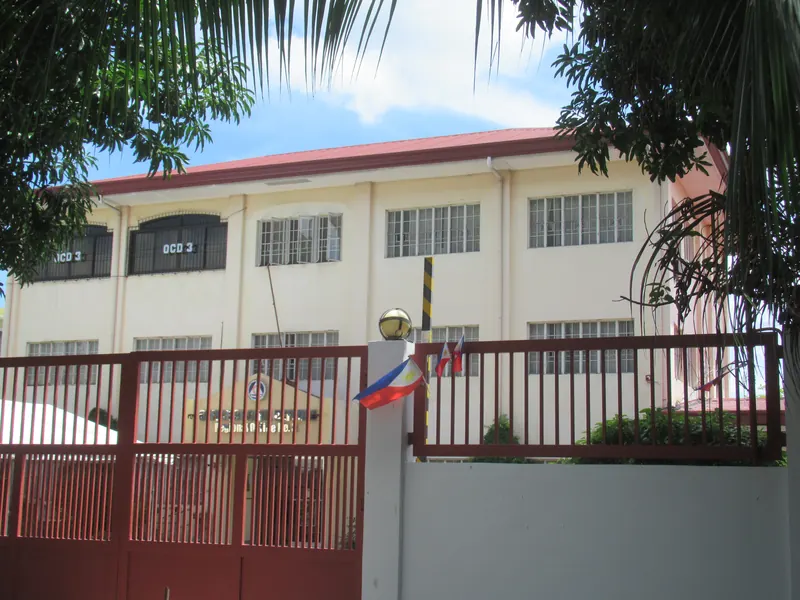
The BI Cebu office at GMall on A. Soriano Avenue, relocated from Mandaue in January 2024, is where the in-person half of this happens for foreigners in the Visayas. The other half no longer needs an office at all.
You can now file a 9(a) extension online
This is the single most out-of-date thing in most Philippine visa advice, including, until this revision, ours.
BI’s Citizen’s Charter carries a full service entry headed “Extension of Temporary Visitor’s Visa (TVV) Through Online System (E-Services)”. It covers one-, two- and six-month extensions for 9(a) holders, filed through the BI e-Services portal, with the acknowledgement receipt, the Official Receipt and the BI Clearance Certificate all returned by email. Payment online is, in the Charter’s own words, “through online payment via Landbank of the Philippines (Link.Biz) or Maya.”
The Charter attaches three eligibility conditions to the online route, and they matter:
- your authorised stay has not yet expired;
- your passport has more than six months of validity;
- your total stay has not reached the cap (36 months for non-visa-required nationals, 24 for visa-required).
The first condition is the one that bites. An overstayer cannot use the online channel. Once your stay has lapsed you are back to a BI counter, in person, on the motion route described below. If you were admitted visa-free under EO 408, your first extension must also be taken as the Visa Waiver rather than as a regular extension.
The fee schedule BI publishes, and the date on it
Every BI fee table on immigration.gov.ph carries the same footnote: “Fees are updated as of 06 March 2014 and may change without prior notice.” There is no published post-2014 revision and no 2026 fee advisory. So the figures below are the ones BI publishes today, carrying the vintage BI itself declares. Every one of them renders from a versioned BI fee file that mirrors BI’s own tables and is read at build time, not retyped into this prose, so a figure here cannot silently drift from its source. How we date and check figures like these is set out in the methodology.
Two structural points before the ladder. First, BI’s published totals already include the express-lane fee. BI publishes no non-express total for these transactions, so “skip the express lane and pay less” is not something the source supports. Second, tourists do not file the Annual Report. BI’s Annual Report page is explicit that it covers “all registered aliens and ACR I-Card holders except Temporary Visitor’s Visa holders or Tourist Visa holders.” If a 9(a) budget you are reading has a PHP 310 annual line in it, that budget is wrong. (The obligation is real for 13(a) and 9(g) holders.)
The extension ladder, step by step
Days 1–30: arrival. Non-visa-required nationals under EO 408 are admitted free for 30 days. No application, no fee.
Days 31–59: the Visa Waiver. A 29-day waiver that completes the standard 59-day initial stay. BI’s total: ₱3,030 (Visa waiver (initial 29-day extension, completing the 59-day initial stay), 29 days) (Philippine Bureau of Immigration, BI's published schedule, vintage 06 Mar 2014 — BI states fees "may change without prior notice").
Day 59: the ACR I-Card triggers. BI: an ACR I-Card is issued “to all registered aliens whose stay in the Philippines has exceeded fifty-nine (59) days.” It is paid alongside the first extension that carries you past day 59, not on arrival and not at the waiver. Fee: $50 + ₱500 (ACR I-Card, issuance) (Philippine Bureau of Immigration, BI's published schedule, vintage 06 Mar 2014 — BI states fees "may change without prior notice").
The first extension beyond day 59. ₱4,400 (First extension of authorized stay beyond 59 days, 1 month) (Philippine Bureau of Immigration, BI's published schedule, vintage 06 Mar 2014 — BI states fees "may change without prior notice") for one month, or ₱4,900 (First extension of authorized stay beyond 59 days, 2 months) (Philippine Bureau of Immigration, BI's published schedule, vintage 06 Mar 2014 — BI states fees "may change without prior notice") for two. This is the most expensive of the short extensions because it carries the head tax, the ACR fee and the certification fee.
Every regular extension after that. ₱2,430 (Subsequent regular extension, 1 month) (Philippine Bureau of Immigration, BI's published schedule, vintage 06 Mar 2014 — BI states fees "may change without prior notice") for one month, ₱2,930 (Subsequent regular extension, 2 months) (Philippine Bureau of Immigration, BI's published schedule, vintage 06 Mar 2014 — BI states fees "may change without prior notice") for two.
The extension that lands on your seventh month. BI charges a one-off Certificate of Residence on this one: ₱3,840 (Extension falling on the 7th month of stay, 1 month) (Philippine Bureau of Immigration, BI's published schedule, vintage 06 Mar 2014 — BI states fees "may change without prior notice") for one month, ₱4,340 (Extension falling on the 7th month of stay, 2 months) (Philippine Bureau of Immigration, BI's published schedule, vintage 06 Mar 2014 — BI states fees "may change without prior notice") for two.
Or the six-month block. The Long Stay Visitor Visa Extension bundles the card, the head tax, the ECC line and the express lane into one payment: ₱11,500 (Long Stay Visitor Visa Extension (LSVVE), 6 months) (Philippine Bureau of Immigration, BI's published schedule, vintage 06 Mar 2014 — BI states fees "may change without prior notice") for non-visa-required nationals. Visa-required nationals pay PHP 13,900 on the same table. It costs more per month than the two-month cadence and it buys back roughly a dozen trips to BI.
What thirty-six months actually costs
Built only from the totals above, with no invented lines:
- Two-month cadence, the cheapest realistic path. Visa waiver 3,030 + first extension beyond 59 days 4,900 + the seventh-month extension 4,340 + fifteen regular two-month extensions at 2,930 = PHP 56,220, or about PHP 18,700 a year.
- One-month cadence, the most expensive path. 3,030 + 4,400 + 3,840 + thirty-two regular one-month extensions at 2,430 = PHP 89,030, about PHP 29,700 a year.
- Six-month LSVVE blocks. The LSVVE sells only in six-month units, so it cannot begin until the first six months are behind you: 3,030 + 4,900 + 2,930 for months one through six, then five LSVVE blocks at 11,500 = PHP 68,360, about PHP 22,800 a year, in eight transactions rather than the eighteen a two-month cadence runs through. A sixth block would carry you to month 38, past the 36-month wall, so five is the most the cap allows.
A real three-year stay mixes cadences and adds the card, so the honest published band is roughly PHP 64,000–71,000 across the full 36 months, or PHP 21,000–24,000 a year. That band is derived. The line items underneath it are BI’s.
All three figures exclude the ACR I-Card, and deliberately so: BI publishes the USD 50 + PHP 500 issuance fee, and it publishes the renewal at the same USD 50 + PHP 500 on its own renewal page, triggered by the expiry of the card’s one-year validity. An earlier version of this page said the renewal was unpublished; that was our path guess failing, not BI’s omission. Over a 36-month run the card is renewed twice, so budget the issuance plus two renewals.
BI also does not say whether the seventh-month rate is charged once or on every extension thereafter. The heading reads “Extension fee after six (6) months of stay (to be charged on the 7th month of stay)”, and the only line separating it from the regular rate is a one-time Certificate of Residence. The totals above assume once. If it recurs, a 36-month run lands nearer PHP 84,000–86,000. Assume the higher figure if you are budgeting tightly.
The overstay fine schedule
BI does publish this part, on the same 2014-vintage table as the extension fees.
| What BI charges | Published amount | How it is applied |
|---|---|---|
| Fine for overstaying | PHP 500 per month | Additional to everything else; runs per month of overstay |
| Motion for Reconsideration (overstaying) | PHP 500 + PHP 10 legal research fee | The filing that puts your case in front of BI at all |
| Administrative fine | PHP 5,000 | Charged for every year of overstay. BI counts eighteen months as two years |
| The extensions you skipped | Ladder rates above | Assessed retroactively for the months you did not pay for |
The Motion for Reconsideration route is the one BI names for foreigners who have overstayed beyond the maximum allowable period or by more than six months. That is the counter you are looking for.
What BI does not publish about overstaying
This is the section that would normally carry confident numbers. We are leaving it empty on purpose, because filling it means making figures up.
The cost and timeline of lifting a blacklist order: unverified. BI publishes the procedure — a letter of request addressed to the Commissioner, with counsel if you want it — but no fee schedule and no processing time for a lifting. Ranges you will see quoted elsewhere (six to eighteen months, six figures in pesos) trace to no BI source we could retrieve. We are not going to launder a forum number into a price.
Whether a voluntary turn-in avoids a blacklist: not a published rule. It is the structural logic of the Motion for Reconsideration route, and it is what the route exists for, but BI publishes no guarantee and the outcome is discretionary.
The BI detention position, corrected. BI’s warden facility inside Camp Bagong Diwa, Bicutan, Taguig is not the only one in the country. A BI release dated 13 November 2025 states plainly that “the BI currently operates two warden facilities — its original detention center inside Camp Bagong Diwa in Bicutan, Taguig City, and another located within the Bureau of Corrections compound in Muntinlupa City.” An earlier version of this article said there was one. It was wrong.
The turn-in route, in the order it actually runs
The asymmetry is the argument. The fine schedule is published, bounded and payable. The blacklist is unpriced, undated and discretionary. Everything below is aimed at staying on the first side of that line.
Go to a BI office in person. The online channel is closed to you the moment your authorised stay lapses, so GMall it is. Bring the passport and every extension receipt you still have.
File the Motion for Reconsideration for Overstaying. PHP 500 plus the PHP 10 legal research fee, per BI’s table. It is the request that asks BI to let you regularise or to let you depart without a derogatory record. Staff draft it at the counter; an immigration lawyer can draft it instead, and for a long overstay that is money well spent.
Settle the assessment. Base fine at PHP 500 a month, the PHP 5,000 administrative fine per year of overstay, the retroactive extension fees, and the ACR I-Card if you never had one. BI issues a receipt. Keep it; it is the only proof you cleared.
Wait for the order. BI does not publish a processing time for an overstay motion, so we will not invent one. Ask at the counter what they are running at that week and plan around the answer, not around a number you read online.
If you are leaving, get the ECC before you book. Details below. The airline, not BI, is the one that will stop you.
ECC on the way out
If you entered as a tourist and stayed six months or more, BI requires an ECC-A before you depart. ECC-B is the version for holders of immigrant or non-immigrant visas with a valid ACR I-Card who are leaving temporarily. The clearance is valid for one month from issue, is usable once, and should be filed at least 72 hours before the flight.
BI does not publish a standalone price for a departure ECC-A. The only ECC figures anywhere on its fee tables are the PHP 700 and PHP 710 lines bundled inside the extension and LSVVE totals, which are a different thing: a line item inside an extension you are already paying for. Any specific ECC-A price quoted by a visa agency is unverified until BI publishes one, and an earlier version of this article quoted two such prices. They are gone.
What is not in doubt is the consequence. Airlines check ECC status at check-in for foreigners flagged as long-stay, because the carrier is liable for repatriating an improperly documented passenger. A boarding refusal on this ground is not negotiable at the counter. Plan the ECC visit before you book the flight, not after.
The thirty-six-month wall
The cap is real: 36 months for non-visa-required nationals, 24 for visa-required, under IMC No. SBM-2013-003, counted from your latest recorded arrival. Three ways off the ladder.
Reset it. Leave and re-enter, and the clock starts again on the new admission. Bangkok, Hong Kong, Taipei, Singapore and Seoul are all direct from Mactan. What the reset does not buy you is a right of entry: admission is always discretionary, and serial visa-runners with no visible change of purpose can be refused. That is not a fee you can plan for.
Convert before you hit it. The SRRV for the over-40s with a deposit. The 13(a) spouse visa if you are married to a Filipino. The 9(g) for employer-sponsored work. The Digital Nomad Visa, created by Executive Order No. 86 in April 2025, for foreign-source remote income. Each one ends the extension cycle, and each one takes months, so start three or four months before the cap, not at it.
Or go. A three-year tourist run is a perfectly respectable way to find out the answer is no.
The take
The compliant path costs what BI’s published tables say it costs: roughly PHP 21,000–24,000 a year on a mixed cadence, express lane included, ACR I-Card excluded entirely; BI prices issuance and renewal alike at USD 50 + PHP 500. Most of it can now be filed and paid online, which is the biggest change to this page since it was written, and it removes the queue from the equation entirely for anyone who is still in status.
The moment you are out of status, the online door shuts and the arithmetic changes character. The fines are published and bounded. What comes after them is not published at all — not the cost of lifting a blacklist order, not the time it takes, not the odds. That asymmetry, and not the peso amount, is the whole reason to file the motion early rather than find out at the airport.
Our sourcing rules for figures like these, including why a 2014-vintage fee table still ships with a 2026 date on the page, are in the methodology.
The full visa landscape sits in the visa options for living in Cebu guide.
FAQ
Frequently asked.
How much does a tourist visa extension cost at BI Cebu in 2026?
Can I extend my tourist visa online, or do I have to queue at BI Cebu?
What is the maximum tourist visa stay in the Philippines?
What happens if I overstay my visa in the Philippines?
Do I need an ECC to leave the Philippines as a foreigner?
Data note. Prices, rates, and details are verified as of publication and may change. Always confirm with the listed provider or landlord before committing. This article is informational, not financial, legal, or immigration advice. Full disclaimer.