The Philippine Retirement Authority restructured the Special Resident Retiree’s Visa with guidelines effective 1 September 2025, and the changes are not cosmetic. Two of the four legacy tiers, Smile and Human Touch, are gone from PRA’s published options. The minimum age dropped from 50 to 40. A Bureau of Immigration clearance step was added to what used to be a pure-PRA process. And the deposit-to-property conversion, the reason many people choose SRRV at all, has a floor that is easy to miss.
This is the 2026 process on the two routes PRA still publishes: Classic and Courtesy. Every figure below is taken from PRA’s own SRRV page and from PRA’s Processing of SRRV Application (Revised Sep 2025) service standard, both read on 12 July 2026, and from PRA’s ID Services fee and renewal page, read 8 August 2026. Where PRA publishes nothing, this article says so rather than filling the hole. Where two PRA pages disagree, it says that too.
Dollar figures matter more than usual on this page, because the deposit is remitted in dollars and refunded in pesos. The BSP reference rate today is ₱62.49/USD (BSP RERB, 10 Sep 2026); the PHP FX ledger carries the history, and our methodology explains how it is maintained.
What the September 2025 restructure changed
Smile and Human Touch are off the menu. PRA’s SRRV page lists Classic, Courtesy (Foreign Nationals) and Courtesy (Former Filipinos), and nothing else. The legacy tiers have not been retroactively cancelled, though: PRA’s live conversion checklists still say the visa deposit “except visa deposit under SRRV SMILE and Human Touch” may be converted into an investment, which is how PRA’s own paperwork acknowledges those holders still exist. They keep their status; they cannot convert their deposit into property.
The minimum age is 40. PRA’s qualified-applicants line reads “Principal/s — 40 years old and above.” The 40-to-49 band pays a higher deposit than the 50-plus band on both Classic and Courtesy for foreign nationals.
The processing fee is USD 1,500. PRA publishes it as a flat USD 1,500 for the principal and USD 300 per joining dependent. That it rose from USD 1,400 is not something PRA publishes; the increase is reported by a named secondary, the law firm ACCRALAW, in its October 2025 client note on the revised guidelines. We cite it as a secondary and do not launder it into a PRA figure.
A BI Clearance Certificate is now a basic requirement. PRA lists the BICC among the documents every principal must file, and its Revised Sep 2025 checklist scopes it to “Principal and Spouse applicants only.” It certifies that you are not in any derogatory database of the Bureau. BI publishes the fee as PHP 1,010 all-in and names the Main Office as the filing point. BI does not publish a processing time for it, and it does not publish whether a field office such as Cebu can issue one. Both are gaps, and we are not filling them with a plausible-sounding number of working days.
Dependents cost more than the fee suggests. USD 300 per joining dependent is only the application fee. The visa deposit covers the principal and two dependents; PRA requires “USD 15,000.00 for each additional dependent in excess of two; except Former Filipinos.”
The deposit tiers
Your deposit is fixed by two things: your age at application, and whether you can document a lifetime pension.
| Age band | Pensioner | Non-pensioner |
|---|---|---|
| SRRV Classic, 50 and above | USD 15,000 | USD 30,000 |
| SRRV Classic, 40 to 49 | USD 25,000 | USD 50,000 |
| SRRV Courtesy (foreign nationals), 50 and above | USD 1,500 | USD 1,500 |
| SRRV Courtesy (foreign nationals), 40 to 49 | USD 3,000 | USD 6,000 |
| SRRV Courtesy (former Filipinos), 50 and above | USD 1,500 | USD 1,500 |
| SRRV Courtesy (former Filipinos), 40 to 49 | USD 3,000 | USD 3,000 |
The deposit is a visa deposit, not a fee: it stays yours, and it is released when the SRRV is discontinued. It has to arrive as an inward remittance from a bank abroad, which rules out walking into a branch with cash you already hold in the Philippines.
The non-pensioner tier is double the pensioner tier because the deposit is doing the work the pension would otherwise do. PRA is buying evidence that you can fund yourself indefinitely, and a lifetime pension is stronger evidence than a lump sum, so the lump sum has to be bigger.
The bank list is shorter than you think
This is where most SRRV write-ups, including our own earlier version of this page, get it wrong. PRA does not accept a deposit at any Philippine bank you like. Its published accredited list is one government bank, the Development Bank of the Philippines, plus a short private-bank list: Philippine National Bank (all branches), Banco de Oro (Pacific Star and Cebu IT Park branches only), Unionbank (all branches), Bank of Commerce (all branches), KEB Hana Bank (Manila branch) and Shinhan Bank (Manila branch).
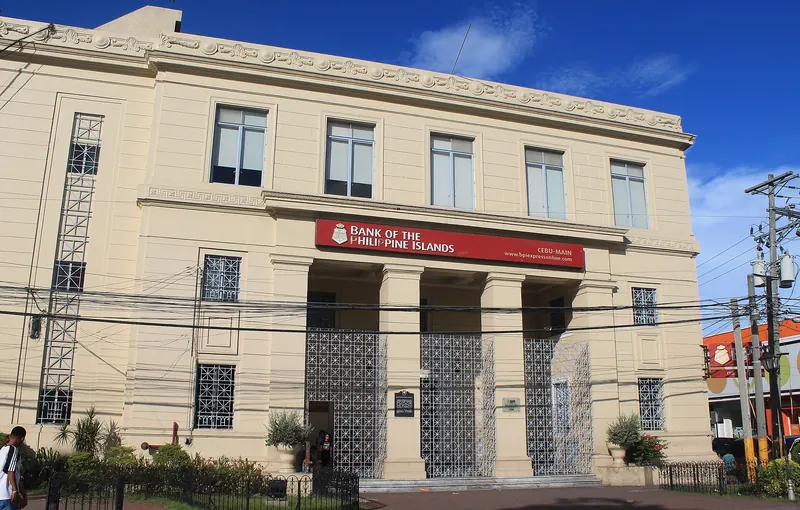
For a Cebu applicant that BDO line is the whole ballgame. Of the hundreds of BDO branches in the country, PRA names exactly two for SRRV, and one of them is in Cebu IT Park. If you plan to bank locally in Cebu, that branch or a PNB or Unionbank branch is your realistic path.
The sequencing also matters, and it trips people up. For any of the private banks, PRA states a Letter of Introduction is needed before the account can be opened, requested from PRA with your passport bio page, the bank and branch, and the SRRV option and amount you intend to remit. Remit first and ask questions later, and you can end up with dollars sitting in an account PRA will not certify.
The document set
PRA’s Revised Sep 2025 checklist is the controlling list. The details that most often cost people a second trip:
- Passport with a tourist visa valid at least 30 days. If it expires while the SRRV is in process, you extend it.
- PRA application form, typed, original signature.
- PRA medical certificate, on PRA’s own examination form template. It may be done at any Philippine hospital or abroad, and it is valid 6 months only.
- Police clearance from your country of origin or last residence, valid 6 months, translated into English if needed and apostilled.
- NBI clearance, but only for applicants aged 18 and over “who have stayed in the Philippines for 90 days or more prior to filing.” Not 30 days. If you fly in and file quickly, you do not need one.
- BI Clearance Certificate, principal and spouse only.
- Certificate of visa deposit from the accredited bank.
- Proof of lifetime pension if you are claiming the pensioner tier: at least USD 800/month single, USD 1,000/month with dependents.
- Eight 2x2 photos, white background, no eyeglasses, taken within the last three months. Eight, not six.
- Proof of relationship for dependents, apostilled: marriage certificate for a spouse, birth certificate for a child.
Note what the pension requirement actually says. It is proof of lifetime pension. A state pension or social security award letter reads as lifetime on its face. A drawdown from a private retirement account does not, because it is a pot you can exhaust. PRA publishes no list of which instruments it accepts, so if your income is a 401(k), an IRA or an annuity, that classification is worth settling with PRA before you file rather than discovering it mid-application.
Timeline: what PRA commits to, and what it does not
PRA publishes a hard number, and it is a good one. The total turn-around time is 10 working days filed at the head office, 10 working days and 2 hours filed through a satellite office. That covers front-desk evaluation, a know-your-customer interview, processing, approval and release.
Then comes the caveat PRA prints directly under its own service standard: “Processing time at the Bureau of Immigration not included.” PRA endorses the application to BI for the actual visa issuance, and BI publishes no turn-around time for that leg. Anyone quoting you a total start-to-ID-card figure is adding an unpublished number to a published one. We are not going to do that. Budget PRA’s 10 working days as fact, the BI leg as unknown, and the BICC and document-gathering front end as unknown.
Converting the deposit into property
This is the feature that makes SRRV interesting to anyone already planning to buy in Cebu, and it comes with a floor almost nobody quotes.
- You must wait 30 days. PRA: conversion is “only allowed 30 days after the issuance of SRRV. The 30 days is the minimum maturity period wherein the visa deposit would stay in the PRA designated bank.”
- The property must be worth at least USD 50,000 in peso equivalent, at the exchange rate on the day the deposit is withdrawn. This is the part that reframes the whole product. A USD 15,000 deposit does not become a condo. It becomes USD 15,000 towards a condo that must clear USD 50,000, and you fund the rest.
- A long-term lease works too, and it is the route for a house and lot, which a foreigner cannot own. It is also the route people take when they want to build rather than buy. The lease “should be at least 25 years and can be renewed for another 25 years at the option of the retiree-lessee and lessor,” and the contract must itself be worth at least USD 50,000.
- The title carries a PRA annotation. A condominium bought this way is titled in the principal retiree’s name and annotated so that any future sale, transfer or encumbrance is subject to PRA approval.
- PRA inspects. An ocular inspection by a PRA officer is scheduled once the documents are complete, and processing only starts after it.
- The deposit is then released as a single peso payment, paid to the lessor in the lease case.
Land is still off the table. The SRRV does not touch the constitutional restriction, which is why the lease route exists at all. Our Cebu condo 40 percent rule guide covers the ownership quota you will hit on the purchase side.
The fee that never stops
Almost every SRRV write-up treats the annual fee as a footnote to the deposit. Read PRA’s own sentence on it instead: the annual fee is “payable upon joining the program and every year thereafter as long as the retiree is a holder of the SRRVisa.” Not for a probationary period. Not until the visa turns permanent, because it is permanent on day one. As long as you hold it.
That reframes the price. The USD 1,500 you notice is the smaller number.
| Paid once | Paid every year | |
|---|---|---|
| PRA processing fee | USD 1,500 | — |
| PRA annual fee, SRRV Classic | — | USD 360 (principal + 2 dependents) |
| Each dependent beyond two | USD 300 application | USD 100 |
| Twenty years of membership | — | USD 7,200 |
| Land Bank charge on a wired fee payment | — | USD 5 per transfer |
| PRA ID card courier, within the Philippines | — | PHP 150 per mailing |
| Replacement PRA ID card | USD 10 | — |
The fees do not go where your deposit went. Your visa deposit sits at a PRA-accredited bank, in Cebu realistically BDO IT Park, PNB or Unionbank. Your PRA fees go somewhere else entirely: cash at a PRA office, or into PRA’s Land Bank of the Philippines account at the Buendia branch in Makati. Land Bank collects USD 5.00 on a telegraphic transfer and PRA is explicit that the retiree eats it. Two banks, two relationships, for the life of the visa.
The ID card is where PRA enforces all of this. PRA Circular No. 004 dated 30 June 2025 sets the PRA ID card at two years’ validity, while the fee table published on the same page is headed “Schedule of Annual Fees” — so the card runs two years and the membership is billed yearly. At renewal, PRA’s Financial Management Division “shall verify retiree-member’s visa deposit and payment records” before it will even issue an order of payment. The card is the audit.
One published contradiction, which we are flagging rather than resolving. PRA’s SRRV page prices the Courtesy annual fee at USD 100 for foreign nationals and USD 50 for former Filipinos. PRA’s ID Services page prices Courtesy and Expanded Courtesy at USD 10 per member. Both pages are live, both are PRA, and PRA does not reconcile them. Classic is USD 360 on both, so this only bites the restricted categories. A second, smaller lag on the same page: its scheme table still labels the current period “at least 50 years old,” eleven months after PRA dropped the floor to 40.
Converting the deposit makes every renewal heavier
Buried in PRA’s ID renewal requirements is a block headed “Additional Requirements: If visa deposit is converted into:”. It applies to nobody who leaves the deposit alone, and it never goes away for anybody who does not.
Convert into a condominium and every renewal wants the CCT annotated with the PRA restriction plus the notarised Deed of Absolute Sale, and a surety or performance bond on top if you bought pre-selling. Convert into a long-term lease and it wants the annotated TCT plus a fresh contract of lease if the one on file has expired. Convert into shares of stock and the list becomes a corporate audit: an updated SEC Certificate of Good Standing, the General Information Sheet as received by the SEC, an updated Mayor’s Permit, the corporation’s latest income tax return, its latest audited financial statements, and certifications of the latest PhilHealth and SSS premium payments.
So the conversion feature is not a one-time swap of dollars for a title. It permanently upgrades your annual PRA renewal from a form and a photo into a documentary exercise against an asset. For a condo that is mildly annoying. For shares in an operating company it is an obligation you are taking on for as long as you want to stay, and it deserves to be priced before you convert, not after.
SRRV against 13(a)
| SRRV Classic | 13(a) spouse visa | |
|---|---|---|
| Who qualifies | Anyone 40+ who can fund the deposit | Foreigner married to a Filipino, any age |
| Capital locked up | USD 15,000–50,000 visa deposit | None |
| PRA / BI annual report | Exempt (PRA) | Files every year, probationary and permanent alike |
| ACR I-Card | Exempt (PRA); voluntary registration only | Required |
| Route to permanence | Permanent on issuance | One probationary year, then permanent |
| Deposit convertible to property | Yes, after 30 days, USD 50,000 floor | Not applicable |
| Ongoing cost to the agency | USD 360 a year, for life | None published by BI beyond the annual report |
| Travel tax on departure | Exempt (PRA benefit) | Payable |
| Tax on pensions and annuities | Exempt (PRA benefit) | No equivalent exemption |
| One-time household-goods importation | Duty and tax free up to USD 7,000 | No equivalent |
| Survives divorce or death of spouse | Yes | No — the visa hangs on the marriage |
That annual-report row is worth dwelling on, because it is commonly stated backwards in both directions. PRA’s benefits list is explicit that an SRRV holder is exempt from BI annual reporting and from the ACR I-Card. A 13(a) holder is not, and that includes the permanent 13(a), not just the probationary year: BI publishes no permanent-resident exemption, and the only classes it excuses are tourists and dual citizens. If you have read that permanent residents stop reporting, that is wrong. One genuine edge remains unpublished: BI’s annual-report page addresses itself to “all registered aliens and ACR I-Card holders,” so an SRRV holder who voluntarily takes an ACR I-Card sits in a space neither agency has written rules for. We flag it rather than guess.
The tax rows deserve a caveat PRA does not give them. “Tax on pensions and annuities” is PRA’s own phrasing of an SRRV benefit, and it is real, but it is not the only thing standing between your pension and the BIR. Residence, source and the relevant double-taxation treaty do most of the work, and for many nationalities the pension would not have been taxed here anyway. Which treaty applies, and what it actually says about pensions, is worked through country by country in the tax-treaty guide. Our guide to what foreigners actually owe the BIR works through the 180-day residency split, what counts as Philippine-sourced, and where the SRRV pension exemption sits inside it; treat the exemption as belt-and-braces on top of your treaty position rather than the thing that saves you.
The main visa options guide lays out the full landscape, including 9(g) work visas, the Digital Nomad Visa created by Executive Order 86 in 2025, and the long tourist-extension path. The 13(a) spouse visa walkthrough covers the married route in detail.
The take
For a pensioned 50-plus retiree, SRRV Classic is one of the cleanest permanent-residency products in Southeast Asia: USD 1,500 to PRA, USD 360 a year, a USD 15,000 deposit that stays your money, a published 10-working-day PRA turn-around, and no annual immigration report for the rest of your life. The cost of entry is genuinely low once you separate the fee from the deposit.
Just price it as a subscription rather than a purchase. The USD 1,500 is the headline number; twenty years of membership is USD 7,200, and PRA’s own wording ties it to the visa, not to a term. If you convert the deposit into a condo or into shares, the renewal paperwork gets heavier for the same twenty years. None of that makes SRRV a bad product. It makes it a recurring commitment that is easy to budget as a one-off.
The 40-to-49 band is a different proposition. Without a pension it is a USD 50,000 lock-up, and the deposit-to-property escape hatch does not soften that as much as it appears to, because the property has to clear USD 50,000 anyway. At that level the honest comparison is against a 13(a) if you are married, or against the tourist-extension path if you are not, and the SRRV has to earn its capital cost rather than be assumed into it.
For Cebu applicants, two things are local and concrete. The Cebu IT Park branch of BDO is one of only two BDO branches PRA accredits for the visa deposit, so the deposit leg can be done in-city. The BICC, on BI’s published guidance, is filed at the Main Office, and whether Cebu can issue one is not something BI publishes. Confirm before you book the flight.
FAQ
Frequently asked.
Does SRRV Smile still exist in 2026?
What is the minimum age for SRRV in 2026?
How much money do I need to deposit for SRRV Classic in 2026?
Can I work or run a business in the Philippines on SRRV?
Can I get an SRRV for the USD 1,500 Courtesy deposit?
Does the SRRV annual fee ever stop?
How does the SRRV deposit-to-property conversion work?
Data note. Prices, rates, and details are verified as of publication and may change. Always confirm with the listed provider or landlord before committing. This article is informational, not financial, legal, or immigration advice. Full disclaimer.