Take the case that brings most people here. The bill lands at ₱8,000 for a 1BR condo in Banilad, and last month was ₱3,100. No new appliances, no new occupants, nothing on the bill that explains it. The instinct is to pay and move on, and that instinct is why most wrong bills stay wrong. Verify three things, in this order: the meter reading on the bill matches what your physical meter shows today, your kWh consumption is not just the hot-season aircon spike, and the building is not on-selling electricity to you through a private sub-meter at a rate above what it paid. Then raise it in writing at a Visayan Electric service center before the due date. If VECO will not fix it, ERC is the backstop.
The five-minute bill check
Run this before you call anyone. Most “wrong” bills resolve in the first two steps and never become a dispute.
- Walk to the meter. Photograph the display, dated. Compare it to the “present reading” on the bill.
- Pull the last six bills. Is the disputed cycle a small bump, or a multiple?
- If you are in a condo, ask the admin in writing whether your bill comes from a VECO meter registered in your name or from a building sub-meter.
- Divide the total bill by the kWh on the stub. That is your effective rate. Compare it to the published rate for that cycle: ₱14.96/kWh, August 2026 (+₱0.06) (Visayan Electric, 2026-08-20 (primary — utility's own peso figure), Aug 2026).
- Cross-check your expected consumption against the renter’s electricity breakdown and the Cebu cost-of-living guide.
If steps 1 to 4 come out clean and the bill is still high, you probably have a real consumption problem rather than a billing error, and the fix is on the appliance side.
Why “anything over ₱14/kWh is a scam” is now bad advice
Almost every bill-shock guide online, including an earlier version of this one, hands you a fixed peso ceiling and tells you that anything above it means somebody is stealing from you. That heuristic breaks the moment the rate moves, and the Cebu rate moves every single cycle:
▸ Show the data table
| Billing cycle | ₱/kWh | Source |
|---|---|---|
| Feb–Mar 2025 cycle | ₱11.13 | Philstar / The Freeman |
| Aug–Sep 2025 cycle | ₱11.60 | Philstar / The Freeman |
| Sep–Oct 2025 cycle (2025 peak) | ₱12.51 | SunStar Cebu |
| Oct–Nov 2025 cycle | ₱11.51 | Philstar / The Freeman |
| January 2026 | ₱11.72 | Newsline Philippines (single source — re-verify) |
| February 2026 (+₱0.35) | ₱12.79 | Philstar / The Freeman; SunStar Cebu |
| March 2026 | ₱12.36 | Visayan Electric official (stated in April announcement) |
| April 2026 (+₱0.21) | ₱12.57 | Visayan Electric official |
| May 2026 (+₱0.31) | ₱12.88 | Visayan Electric official, May 2026 cycle |
| June 2026 (+₱0.86) — named-secondary only | ₱13.74 | SunStar Cebu, 2026-06-28 (named secondary — Visayan Electric published no June peso figure) |
| July 2026 (+₱1.16, 2026 high) | ₱14.90 | Visayan Electric, 2026-07-18 (primary — utility's own peso figure) |
| August 2026 (+₱0.06) | ₱14.96 | Visayan Electric, 2026-08-20 (primary — utility's own peso figure) |
The all-in residential rate ran ₱12.57/kWh in April 2026, ₱12.88 in May, ₱13.74 in June, ₱14.90 in July and ₱14.96 in August. A fixed ₱14 “scam line” was defensible against a ₱12.79 rate and is now below the published rate outright: at ₱14.96 it flags every correctly-billed household in Cebu. Send an ERC complaint on that basis and you will lose it.
So the test is relative, not absolute. Your effective rate is measured against the published all-in rate for the cycle you were billed for, which is why we keep the series live rather than typing it into prose: ₱14.96/kWh, August 2026 (+₱0.06) (Visayan Electric, 2026-08-20 (primary — utility's own peso figure), Aug 2026). The full per-cycle history, with the source behind each point, is published at /data/cebu-electricity-rate, and how we verify and stamp it is at /methodology.
Step 1: verify the meter reading
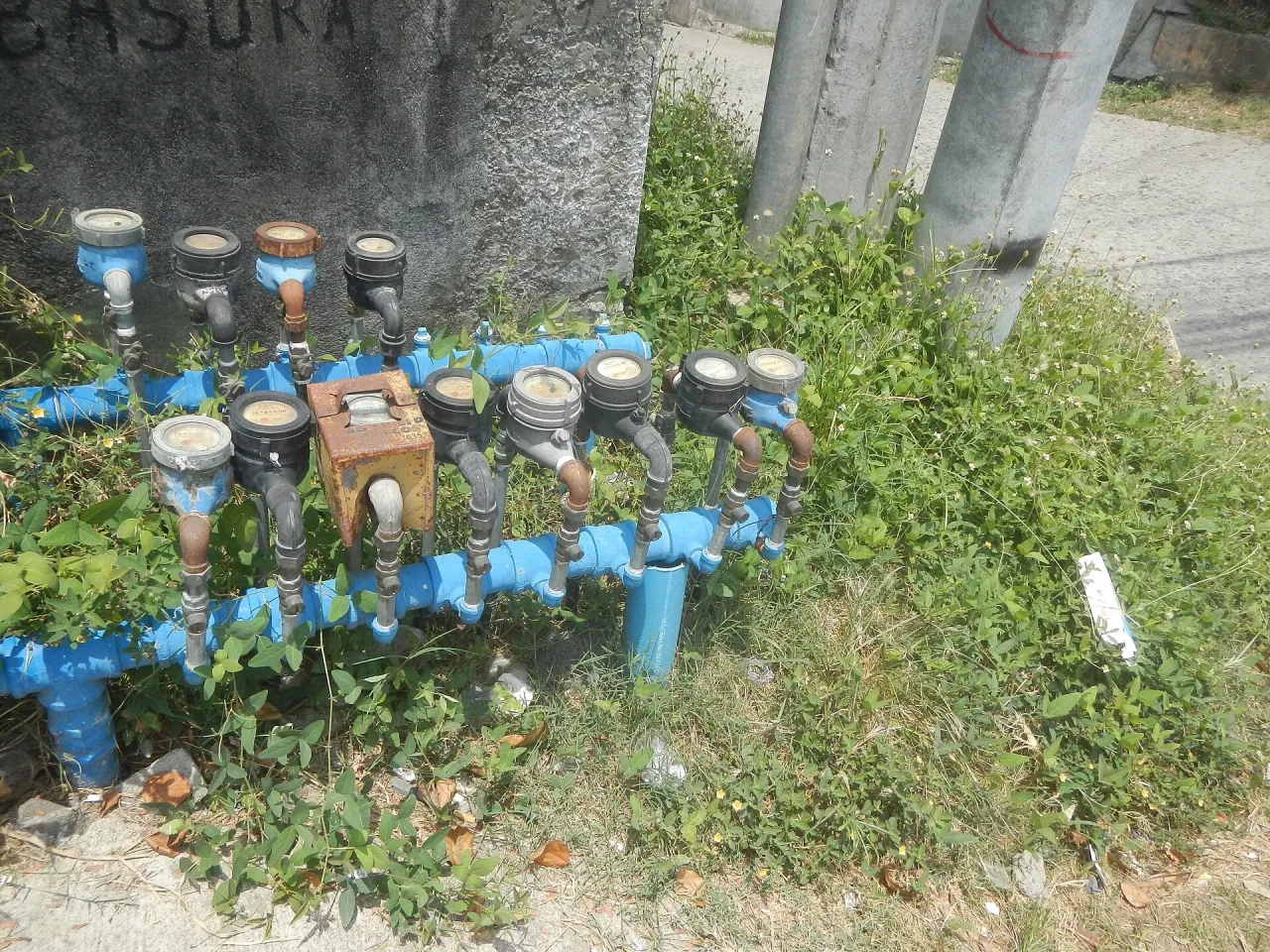
Meter readers walk routes once a month. The bill is (present − previous) × rate. The most common winnable dispute is a misread: a transposed digit, the wrong meter photographed in a stacked-meter bank, or an estimated reading on a cycle where the reader could not get access.
Walk to your meter and take a dated photo.
- Mechanical cyclometer meters, common in older Banilad walk-ups, Mabolo buildings and individual Talamban homes: a row of dials or digits. Ignore the small spinning disc or red indicator, it is not part of the reading.
- Digital meters, common in the newer IT Park and Mandaue towers: a continuous kWh readout, sometimes rotating through demand and voltage. Wait through the rotation.
Then compare. If your meter today reads 28,450 kWh and the bill claims a present reading of 29,100, that is a 650 kWh overstatement and it is the entire reason your bill is high. That one closes fast.
The subtler case: the bill’s present reading is lower than the previous reading you were charged on. Either last cycle was estimated and this one is catching up, or the meter was swapped mid-cycle. Ask for the reading history at the service center and reconcile it yourself.
Under the ERC’s Magna Carta for Residential Electricity Consumers, you can also demand that a suspect meter be tested, and if it is found inaccurate, that it be replaced or recalibrated, with the billing adjusted. That is a slower route than a reading dispute, and it is the right one when the meter itself, not the reading, is what you doubt.
Step 2: check the kWh against your actual load
Before you argue about a rate, sanity-check the consumption. Divide the disputed peso total by the current published rate and you get the kWh the bill implies. At the July 2026 cycle rate, an ₱8,000 bill implies roughly 540 kWh. Is that plausible for what you run?
| Household profile | Typical monthly consumption | What drives it |
|---|---|---|
| 1BR, no aircon, fans only | 120–200 kWh | Fridge, lights, electronics, washing machine |
| 1BR, one 1.0HP inverter aircon, 8 hrs/night | 250–350 kWh | The common Banilad / IT Park 1BR profile |
| 1BR, one 1.0HP non-inverter aircon, 8 hrs/night | 350–500 kWh | Older units; more consumption per unit of cooling |
| 2BR, two inverter aircons, 8 hrs/night each | 430–660 kWh | Family or shared rental |
| 2BR, aircon running most of the day | 660–950 kWh | Check that the meter is yours and not the building's |
| Add: instant electric shower heater | +40–120 kWh | Tankless heaters draw hard in short bursts |
To turn any row into pesos, multiply by the rate: ₱14.96/kWh (Visayan Electric, 2026-08-20 (primary — utility's own peso figure), Aug 2026). We deliberately do not print a peso column, because a peso column computed at last quarter’s rate is exactly how bad advice ships.
If you are one person in a 1BR with one aircon and the bill implies 540 kWh, then either the aircon runs longer than you think, an appliance is faulty, or the reading is wrong. The two biggest swings are the setpoint (22°C versus 25°C is a large, continuous difference in compressor duty) and inverter versus non-inverter at the same cooling output.
Step 3: the condo sub-meter markup
This is the one renters miss. Some Cebu buildings, older Banilad walk-ups, certain serviced units around IT Park, some Mabolo and Lahug mid-rises, sit on a single VECO master meter. The admin reads a private sub-meter on each unit and bills the tenant directly. Nothing about that arrangement is inherently improper. What matters is the number at the end of it.
A caveat we would rather publish than paper over: we could not establish at a primary ERC source which issuance actually governs condo sub-metering. The resolution number that circulates online for this (Resolution No. 12, Series of 2009) is, on the Supreme Court’s own e-library, the rules for testing and maintaining distribution-utility meters, not a sub-metering rule. Legal commentary consistently states that a reseller may not profit on the energy itself and that administrative charges must be separately disclosed, but that is commentary, not an issuance we could read. So we will not quote you a legal per-kWh cap.
What survives that gap intact is the practical test above, and the escalation route: the building has to be able to show that what it charged you follows from what VECO charged it. If it cannot, take the paper to ERC.
Step 4: check the classification on the stub
A quieter failure: the connection is billed against a non-residential schedule. Commercial and general-power connections carry charges that residential ones do not, including a power-factor adjustment when reactive draw is high. If a “power factor” line appears on a household bill, you are being billed on the wrong schedule.
Look at the customer class printed on the stub. It should say Residential or RES. Anything else, and reclassification is the ask. This catches people in mixed-use buildings, where ground-floor commercial and upper-floor residential end up sharing a classification.
Step 5: is it just the heat?
Cebu’s hot season runs roughly March to May. The daytime peak is higher, and more to the point the nights stop cooling down, so the cross-ventilation that let you sleep without aircon in January stops working in May. An inverter unit fighting a bigger temperature differential also draws more power per hour, not just for more hours. Runtime and load rise together, which is why the increase feels disproportionate to the change in habits.
Compare the disputed cycle against the same month last year, not against last month. Last May at 420 kWh against this May at 440 kWh is normal for the season. 280 kWh against 620 kWh is not, and the rest of this article applies.
When the bill is right and the consumption is real
If the meter checks out and the effective rate matches the published rate, the electricity is genuinely being used. The usual culprits:
- A clogged aircon filter. The unit runs longer to reach setpoint. Clean it monthly in hot season. It is a five-minute job and the biggest single-action fix on this list.
- A failed refrigerator door seal. Warm air leaks in continuously and the compressor never gets to rest. Test it by closing the door on a sheet of paper: if the paper slides out with no resistance, the gasket is gone.
- A setpoint far below what you need. 25°C with a fan moving air beats 22°C with still air, and the compressor duty between them is not close.
- Phantom standby load. TV, set-top box, console, AVR, modem, instant heater. Individually trivial, continuously on. A switched power strip kills the lot.
- A water-heater thermostat that will not cut out. A storage heater stuck at full load is the one fault on this list big enough to look like a billing error on its own.
None of these are disputable with VECO. All of them are worth ruling out before you queue at a service center.
Where to file it
Visayan Electric’s contact page lists six full service centers around metro Cebu, plus an engineering office on J. Panis Street in Banilad. It does not name which office handles billing complaints, so take the service center closest to you; the dispute mechanics are identical.
| Full service center | Address |
|---|---|
| Jakosalem | 52 D. Jakosalem Street, Cebu City |
| Banawa | Unit 206, 2nd floor, Building C, 8 Banawa Centrale, R. Duterte Street, Cebu City |
| Parkmall | Ouano Avenue, Mandaue City |
| South Extension | Tabunok, Talisay City |
| Liloan | Beside 3L Gasoline Station, Poblacion, Liloan |
| Naga | Eugenia Square, N. Bacalso Avenue, Brgy. East Poblacion, City of Naga |
Bring the disputed bill, a dated photo of your meter taken that morning, government ID (passport for foreigners), a copy of the lease or title showing the service address, and whatever reading and payment history your online account exposes.
Then:
- Ask for the Consumer Welfare Desk. Every distribution utility has to run one under the Magna Carta, even though Visayan Electric does not publish which counter it is. File the dispute in writing and get a stamped copy or a reference number. Without one you have nothing to escalate.
- Under the Magna Carta, the utility records the complaint, investigates, and reports back within the period set in its Compliance Plan, or within 15 days where none applies.
- Keep paying the undisputed portion. The Magna Carta’s right to pay under protest exists precisely so that supply continues while the argument runs.
- Outcomes: no change, a corrected reading with a credit on the next cycle, or a meter test if the meter itself is in question.
Escalating to ERC
If the utility does not respond, or rules against you on a reading you can demonstrably disprove, the Energy Regulatory Commission is next.
One distinction worth getting right: in a sub-meter case, the respondent is the building, not the utility. VECO sold electricity to the building at its published rate. Whatever happened between the master meter and your unit happened inside the building, and the documents that decide it are the master bill, your sub-meter readings, and the computation joining them.
Recovering more than the current cycle is a civil matter, and how far back you can go is a question for a lawyer, not for us. We are not going to publish a prescription period we have not verified.
The ₱8,000 bill is not always wrong. Sometimes it is the aircon, sometimes it is the season, sometimes it is a genuine misread or a building marking up what it bought. The order is what protects you: read the meter, check the kWh against your load, work out the effective rate against the published rate for that cycle, and only then dispute. If you are still setting up and want the auto-debit and cash-flow side sorted, the bank account guide covers it.
FAQ
Frequently asked.
What is the maximum I should be paying per kWh in Cebu in 2026?
Is it legal for my condo to charge me more than the VECO rate?
How long do I have to dispute a VECO bill?
What if VECO refuses to acknowledge my dispute?
Can I read my own VECO meter?
My bill jumped from PHP 3,000 to PHP 8,000 with no change in usage. Is that fixable?
Data note. Prices, rates, and details are verified as of publication and may change. Always confirm with the listed provider or landlord before committing. This article is informational, not financial, legal, or immigration advice. Full disclaimer.