Davao Light’s residential rate held in a tight band for most of the first half of 2026, then added PHP 1.95/kWh (June 2026 cycle) in a single billing cycle, an 18.8% jump the utility blames on WESM generation charges after simultaneous plant outages, and another ₱0.79/kWh in July before the August cycle eased back. The current rate is ₱12.90/kWh, 2026-08 (Davao Light via Mindanao Times — August 11 to September 10, 2026 cycle, Aug 2026). Eight months ago it was ₱9.71: the rate you are quoted on the day you sign a lease is not the rate you will pay all year. Learning to budget for the band rather than the spot figure is the single most useful thing this guide can teach.
This is LiveInPH’s Davao cluster cost pillar. The utility lines read live from our DLPC and DCWD ledgers, the rent lines from our editorial Davao rent baseline, and everything under those numbers is published: see the dataset catalog and how we source and verify. Where we cannot verify a figure, we say so rather than fill the hole.
The Davao layout
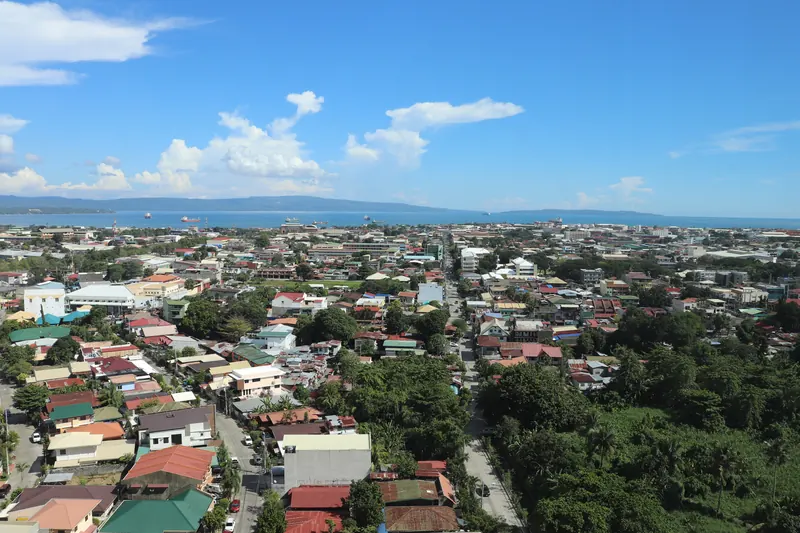
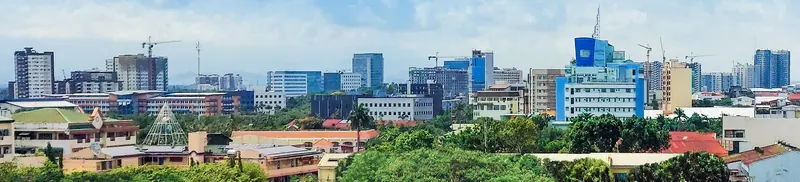
Davao is the largest city in the Philippines by land area at 2,444 square kilometers, roughly eight times Cebu City’s footprint. That spread shapes everything: rent is cheaper, traffic is lighter than Cebu’s worst, but you cannot walk between neighborhoods the way you can in Cebu’s IT Park–Ayala–Lahug triangle. Five districts capture almost all expat residency:
- Lanang: northeast, near the airport and SM Lanang Premier. Condo-heavy. The default first stop for relocating expats and the most expensive of the five.
- Downtown / Poblacion: central, along J.P. Laurel Avenue. Home to Abreeza Mall (Ayala Malls) and Davao Doctors Hospital. Mid-tier condos including Abreeza Place anchor the corridor.
- Matina-Ecoland: south-central, near SM City Davao. Older subdivisions and mid-tier condos at lower rents, with some flood exposure near the Matina River.
- Buhangin: northern hills, mostly subdivisions and houses. Robinsons Highlands sits here. Car or motorbike effectively required.
- Toril: far south, cheapest, weakest public transport, longest commute.
Downtown’s commercial core works for offices, not for residence. Most expats who want central choose Bajada or Lanang instead.
Monthly budget: solo expat
The most-shared cohort gets the table. Couples and families get prose with the same anchored figures.
| Category | Range | Notes |
|---|---|---|
| Rent (studio, Downtown/Poblacion or Matina) | ₱12,000–₱22,000 | LiveInPH Davao rent baseline, May 2026 — editorial, no listing sample. Furnished adds 20–30% |
| Electricity (DLPC, 200–350 kWh) | ₱2,580–₱4,515 | Computed at the current ledger rate. One billing cycle can move this line by a fifth |
| Water (DCWD) | ₱100–₱500 | Lifeline flat charge under 5 cu.m.; above that, the last published DCWD schedule is Feb 2024 — see the gap below |
| Internet (Converge or PLDT fiber, entry to mid fibre plan) | ₱1,500–₱2,500 | Advertised plan pricing, checked May 2026; not re-verified since |
| Food (mix cook + carinderia + occasional dining) | ₱8,000–₱13,000 | Editorial estimate |
| Transport (jeepney + ride-hailing) | ₱1,500–₱3,500 | Editorial estimate; see the fare note below |
| Phone (postpaid mid-tier) | ₱500–₱1,000 | Editorial estimate |
| Misc (laundry, household, leisure) | ₱2,500–₱5,000 | Editorial estimate |
| Total | ₱28,680–₱52,015 |
Electricity computed from the DLPC series in our utility-rate ledger (August 2026 cycle). Water per the DCWD series (Feb 2024, last published peso schedule — verification gap). Rent per LiveInPH's editorial Davao rent baseline (May 2026, n=null). Remaining lines are editorial estimates and carry no source.
A couple typically lands at ₱60,000–₱80,000/month. The rent line lifts to ₱15,000–₱33,000/month for a 1BR in Downtown/Poblacion. Electricity at 300–500 kWh works out to ₱3,927–₱6,545/month (July 2026 rate) with heavier AC, a kitchen in use and two laptops. Food roughly doubles with more dining out. Add an entry-tier HMO each (Maxicare, MediCard and Intellicare all sell in Davao).
A family of four with one child in private school sits at ₱100,000–₱130,000/month. A 3BR house in Buhangin’s Ladislawa or Woodridge, or a larger Lanang condo, is the biggest housing line and sits above anything our rent baseline tracks (it covers studios and 1BRs only). Electricity at 500–850 kWh across multiple AC units and a water heater runs ₱6,545–₱11,127/month (July 2026 rate).
The school line is the swing factor, and it is also our biggest gap. Ateneo de Davao announced zero tuition and fee increases across all units for SY 2026–2027, which is the most useful thing a relocating parent can know this year. What no Davao school publishes online is an actual peso assessment: not Ateneo, not the international-curriculum schools. Figures circulating on expat aggregator sites are not sourced to any school, so we do not repeat them. Email the admissions office for the current assessment form before you commit to a budget; that single email is worth more than any number we could put here.
The honest version: cut significantly if you commit to Toril or Catalunan and a stripped-down lifestyle; add 30–50% if you target Lanang waterfront with a car, a driver, a helper and an international-curriculum school.
Housing: the rent baseline, and what it is not
Our Davao rent bands are an editorial baseline, not an index. No listing sample has ever been collected. n is null on every segment, there is no median, and no p25/p75 has been invented to look like there is. The number between the low and the high is an arithmetic midpoint and nothing more. Listing portals block programmatic collection, so a real counted sample needs a manual quarterly browse we have not yet done. Use these bands the way you would use a colleague’s opinion: a prior to negotiate against.
▸ Show the data table
| Segment | Low | Midpoint | High | n | Confidence |
|---|---|---|---|---|---|
| Lanang · Studio | ₱18,000 | ₱24,000 | ₱30,000 | — | low |
| Lanang · 1BR | ₱25,000 | ₱37,500 | ₱50,000 | — | low |
| Downtown / Poblacion · Studio | ₱12,000 | ₱17,000 | ₱22,000 | — | low |
| Downtown / Poblacion · 1BR | ₱15,000 | ₱24,000 | ₱33,000 | — | low |
| Buhangin · Studio | ₱10,000 | ₱13,250 | ₱16,500 | — | low |
| Buhangin · 1BR | ₱14,000 | ₱19,500 | ₱25,000 | — | low |
| Matina · Studio | ₱12,000 | ₱16,000 | ₱20,000 | — | low |
| Matina · 1BR | ₱18,000 | ₱23,000 | ₱28,000 | — | low |
| Toril · Studio | ₱6,000 | ₱8,000 | ₱10,000 | — | low |
| Toril · 1BR | ₱10,000 | ₱12,500 | ₱15,000 | — | low |
Named buildings expats actually rent in: Abreeza Place Towers (Bajada, JP Laurel Avenue, Ayala Land), Avida Towers Davao (Mintal and Bajada), Camella Northpoint, One Oasis Davao (Mamay Road), Verdon Parc (Ecoland), Ridgewood Tower (Bajada), Filinvest Bridges Town (Matina). Boutique buildings dot Lanang and Bajada. Many never list on portals, which is part of why a portal sample would understate the market even if we had one.
The standout Davao housing decision usually isn’t neighborhood. It’s condo versus house. Davao’s lower density makes houses with a small garden reachable at rents that buy a mid-tier condo in Cebu, and subdivisions like Ladislawa, Woodridge and Bangkal offer a lifestyle most Cebu expats can’t access without doubling their budget. That is the structural difference between the two cities, and it survives every rate cycle.
For neighborhood-by-neighborhood depth (flood exposure, commute math, who each district suits), the best neighborhoods in Davao for expats walks Lanang, Bajada, Matina, Buhangin and Toril in detail.
Utilities, and why the volatility matters
This is the section every templated cost-of-living page either skips or fakes. Davao Light publishes a rate per billing cycle (roughly the 12th of one month to the 11th of the next), and Mindanao’s generation mix produces a band, not a stable figure.
▸ Show the data table
| Billing cycle | ₱/kWh | Source |
|---|---|---|
| December 2025 cycle | ₱9.71 | Davao Light via GMA Regional TV (stated in Jan 2026 article body) |
| January 2026 (+₱2.0052) | ₱11.72 | Davao Light via GMA Regional TV; corroborated by Bombo Radyo Davao |
| February 2026 | ₱10.30 | Davao Light via Mindanao Times — Feb 11 to Mar 11, 2026 |
| March 2026 | ₱10.63 | Davao Light via Mindanao Times — Mar 12 to Apr 11, 2026 |
| April 2026 | ₱10.53 | Davao Light via SunStar Davao — Apr 12 to May 11, 2026 |
| May 2026 (−₱0.18) | ₱10.35 | Davao Light via Mindanao Times; cross-confirmed by SunStar Davao |
| June 2026 (+₱1.95, +18.8%) | ₱12.30 | Davao Light via Mindanao Times — bills received June 11 to July 10, 2026 |
| July 2026 (+₱0.79) — named-secondary only | ₱13.09 | Davao Light via Mindanao Times, 2026-07-19 — July 11 to August 10, 2026 cycle |
| 2026-08 | ₱12.90 | Davao Light via Mindanao Times — August 11 to September 10, 2026 cycle |
The current cycle is ₱12.90/kWh, 2026-08 (Davao Light via Mindanao Times — August 11 to September 10, 2026 cycle, Aug 2026). One sourcing caveat we owe you: davaolight.com publishes no readable current-rate page, so every point in that series (including this one) is carried by named regional press rather than by the utility’s own site. Named regional outlets carried the August figure, Mindanao Times, SunStar Davao and News Fort, and it reconciles with our stored July point, which is why we publish it. We hold the whole series at medium confidence and will not upgrade it until the utility publishes a peso figure itself.
How to actually budget for this. A studio expat running AC consumes roughly 250 kWh a month. Across the cycles we have observed, that same 250 kWh has produced a bill anywhere from ₱2,428–₱3,273/month (Dec 2025 – Jul 2026 observed range). Set your utilities reserve at the top of that band and let the cheap months be the buffer for the expensive ones. An expat who penciled in June’s usage at May’s rate underpaid their own estimate by nearly ₱500 in one month.
The drivers of the swings: WESM spot generation cost, NGCP transmission, hydro availability, coal pricing at Therma South, and ERC pass-throughs. None of them are forecastable by a resident, which is exactly why band-budgeting beats trying to time the rate.
Water (DCWD). Davao City Water District has a reliability reputation that Cebu’s MCWD does not quite match. The residential lifeline charge is ₱100 (lifeline, under 5 cu.m.) (DCWD via GMA News — second tranche, effective Feb 2024, Feb 2024) [Verification gap: The February 2024 figures (minimum ₱214.20; brackets +22.50/29.00/38.50/56.20 per cu.m.) remain the most recent peso amounts any source has actually published. A third ~9.99% LWUA-approved tranche took effect on July 2024 billing (Manila Bulletin, Mindanews, Edge Davao all confirm the timing) but no post-July-2024 article reproduces the implemented peso figures.] and most studios and 1BRs land near it. Above that, we hit a wall.
Internet. PLDT has the widest national footprint, Globe is strong centrally, and Converge has the fastest 2026 Davao rollout, especially in Agdao, Poblacion, Talomo and Lanang. Davao’s fibre rollout lags Cebu’s: older subdivisions and parts of Buhangin and Toril sometimes have only Globe LTE. Plan pricing moves with promo cycles, so check the provider’s address checker and its current price list before you commit to a lease rather than trusting any figure on a guide page, ours included.
For the Cebu-side comparison, the Cebu electricity bill guide for renters covers Visayan Electric, currently ₱14.96/kWh (Visayan Electric, 2026-08-20 (primary — utility's own peso figure), Aug 2026).
Transport
Davao runs on jeepneys, ride-hailing, metered taxis and modernised PUVs. The 2026 fare picture is genuinely unsettled, and we would rather say that than print a tidy table.
On 17 March 2026 the LTFRB approved a fare adjustment: traditional jeepney minimum from ₱13 to ₱14, modern jeepney minimum from ₱15 to ₱17, with per-kilometre charges rising alongside, plus increases for buses, airport taxis and TNVS. It was to take effect on 19 March. On 18 March the President ordered it suspended and deferred amid the fuel-price spike, with no end date given. We have not been able to confirm whether the deferred increase has since been implemented, so we publish the last confirmed picture and the gap around it: the traditional-jeepney minimum was ₱13 and the modern-jeepney minimum ₱15 before the suspension. Ask the driver, and expect ride-hailing to price above whatever the matrix says at peak.
Two things about Davao transport are stable enough to plan around. Metered taxis still work here, which Cebu has largely lost; insist on the meter. And a personal motorbike is genuinely practical in a way it is not in a denser city. Car ownership is more practical here too: parking is cheaper and easier and traffic is moderate by Philippine standards, which is why many family expats in Buhangin, Catalunan and Toril run one.
Food and shopping
Three malls anchor most expat shopping: SM Lanang Premier (newest, premium, near the airport), SM City Davao (Matina-Ecoland, family-tier, larger) and Abreeza Mall (Bajada, Ayala Malls, upscale). Gaisano Mall covers mass-market.
For fresh produce, the canonical Davao playbook is a weekly Bankerohan Public Market run. Bankerohan operates around the clock, is the largest public market in the city, and is where Davao’s durian, mangosteen and pomelo trade well below mall prices. A Bankerohan-plus-supermarket split is the single biggest lever on a solo grocery bill here, and it is the reason the food line in the table above has such a wide low end.
Dining tiers, as of mid-2026 and from our own ordering rather than any published survey: carinderia PHP 50–100 a head; casual restaurant PHP 200–400; mid-tier mall PHP 400–700; hotel or resort dining PHP 800–2,500. Marco Polo Davao and the SM Lanang dining concourse anchor the upper end.
Coworking: the line worth budgeting explicitly
If you’re a remote worker, budget this line on purpose rather than absorbing it. Davao has a small but real coworking market. Serviced-office operators run two locations (Felcris Centrale on Quimpo Boulevard and HQ Downtown Tower in Bajada), with dedicated desks advertised in the PHP 5,000–6,500 band and private offices from around PHP 7,400 per person when we last checked in May 2026. We have not re-verified those quotes since, and operator pricing here moves with occupancy, so take them as an order of magnitude and ask for a current rate card. Smaller independent spaces in Bajada and Lanang advertise day passes at roughly PHP 300–500.
Most central condo buildings (Abreeza Place, One Oasis, Verdon Parc) include a work corner in the common areas. Usable, but not a substitute if you take calls daily. The practical answer for most remote workers: put a coworking line of around PHP 6,000 a month into the solo budget if you will be out of the apartment three or more days a week.
Healthcare
Four named hospitals cover most expat care:
- Davao Doctors Hospital (Bajada). Established premium private; the default first stop for expats with HMO coverage.
- Southern Philippines Medical Center (Bajada). Major public tertiary hospital; lower cost, longer waits, strong reputation for serious cases.
- San Pedro Hospital (central Davao). Mid-tier private.
- Brokenshire Hospital. Faith-based private, established and reliable.
Maxicare, MediCard, Intellicare and PhilCare all operate in Davao, with networks that cover at least Davao Doctors and San Pedro. Premiums and consult fees vary enough by plan and by year that we will not print a band we cannot source; get two written quotes before you land. What matters more for the budget is structural: complex specialist care (advanced cardiac, oncology) still often means a flight to Cebu or Manila, so a family with a chronic specialist need should carry one or two flights a year as a line item.
Davao vs Cebu: head to head
The two rate comparisons that matter both read live from the ledger. Electricity: Davao Light is ₱12.90/kWh (Davao Light via Mindanao Times — August 11 to September 10, 2026 cycle, Aug 2026) against Visayan Electric’s ₱14.96/kWh (Visayan Electric, 2026-08-20 (primary — utility's own peso figure), Aug 2026), both now on the August 2026 cycle, so this is a like-for-like read: Davao runs about ₱2.06/kWh cheaper, roughly 14%, an advantage that held through the summer increases on both grids and widened as Davao eased on its August cycle. One caution holds. The sourcing runs opposite ways, since the Cebu figure is Visayan Electric’s own published peso amount while the Davao side is carried by named regional press at medium confidence. Water: ₱214.20 (first 10 cu.m.) (DCWD via GMA News — second tranche, effective Feb 2024, Feb 2024) [Verification gap: The February 2024 figures (minimum ₱214.20; brackets +22.50/29.00/38.50/56.20 per cu.m.) remain the most recent peso amounts any source has actually published. A third ~9.99% LWUA-approved tranche took effect on July 2024 billing (Manila Bulletin, Mindanews, Edge Davao all confirm the timing) but no post-July-2024 article reproduces the implemented peso figures.] against Cebu’s ₱259.16 (first 10 cu.m.) (MCWD via Philstar / The Freeman — final 10% tranche, effective 2026-04-01, Apr 2026) [Sourcing note: MCWD publishes NO residential tariff schedule on its own website. Every peso figure in this ledger (minimum ₱259.16 / 10 cu.m.; tiers ₱28.64, ₱33.71, ₱82.52) is attributed to MCWD via NAMED SECONDARIES — Philstar / The Freeman (2026-03-28) and Cebu Daily News — not via a primary MCWD publication.]. That water comparison is not a fair fight and we will not present it as one, since the Davao side is two years old and the Cebu side is current.
| Davao City | Cebu City | |
|---|---|---|
| Solo expat budget (editorial) | PHP 45,000–55,000 | PHP 55,000–75,000 |
| Couple budget (editorial) | PHP 60,000–80,000 | PHP 80,000–110,000 |
| Electricity | Lower — see the live rates above | Higher — see the live rates above |
| Typhoon exposure | Outside the belt, minimal | Major, annual season |
| Smoking / firecracker / curfew rules | Strict, enforced | Standard PH rules |
| Direct international flights | Limited (SIN, DOH, HKG, and a handful more) | Many, daily to multiple Asia hubs |
| BPO / job density | Modest, growing | High, major Asia BPO hub |
| Expat community size | Small but stable | Large and active |
| Car ownership practicality | High, parking easy | Moderate, congested core |
For the full paired-data treatment (the DLPC vs VECO trend charts side by side, the rent baselines head to head, and the typhoon-exposure breakdown), see the Cebu vs Davao decision framework.
Davao vs Manila, and the honest limit of that comparison
Davao is cheaper than Metro Manila. Rent is the biggest spread, and electricity in Manila runs on a different distribution utility with its own cycle. We do not maintain a Manila ledger, and the global cost-of-living rankings that would let us put a number on the gap are crowd-submitted aggregators we refuse to cite. So the honest statement is the one we can defend: on the two lines we do measure, Davao is the cheapest of the three Philippine cities we track. Anything more precise about Manila would be a number we made up, and this site does not do that.
Who Davao works for, and who it doesn’t
Davao fits:
- Retirees on fixed income who want predictable rules and no typhoon exposure
- Remote workers who don’t need frequent international travel and can absorb a coworking line
- Families who value low traffic, outdoor space, and a strong private-school market
- Couples and individuals who prefer a quieter expat scene
- Anyone for whom a lower monthly rent and utility base materially extends the runway
Davao is harder for:
- Expats needing frequent international flights; DVO connectivity is real but limited
- Active career-seekers in BPO, finance or tech; Cebu and Manila have far more roles
- Single expats looking for a large, active dating or social scene
- Anyone who needs late-night dining or nightlife; the 1 AM–8 AM liquor ban is enforced
- People who can’t tolerate the smoking, firecracker and helmet ordinances
This is the cost pillar of LiveInPH’s deliberately small Davao cluster. The series behind it are public: the dataset catalog carries the utility and rent files with their sources, sample sizes and known limitations, and our methodology explains what an editorial baseline is and why we publish gaps instead of filling them. For the cluster overview, the Davao hub carries the live numbers. For neighborhood-level decisions, see best neighborhoods in Davao for expats. For the safety conversation, is Davao safe? Mindanao terror fears vs. expat reality addresses embassy advisories versus on-the-ground experience. For the Cebu-or-Davao decision itself, the Cebu vs Davao decision framework lays out the paired-data trade-offs.
Deeper Davao residency questions (schools beyond the named anchors, dating-scene reality, multi-month rentals, Bisaya immersion, durian season) sit outside this cluster’s comparison scope by design.
FAQ
Frequently asked.
How much does it cost to live in Davao City as an expat in 2026?
How much is rent for a 1-bedroom condo in Davao City?
How volatile is Davao electricity, really?
Did DCWD raise water rates in 2026?
Is Davao a good city for expats compared to Cebu?
What are the main neighborhoods for expats in Davao City?
Data note. Prices, rates, and details are verified as of publication and may change. Always confirm with the listed provider or landlord before committing. This article is informational, not financial, legal, or immigration advice. Full disclaimer.