PhilHealth will tell you exactly what it pays for an appendectomy. As of July 2026 the case rate is ₱46,800 (PhilHealth Circular 2024-0037), split into a facility fee and a professional fee, printed in a public annex, the same in Cebu as in Manila. What no Cebu private hospital publishes is what it charges for the same operation. That asymmetry is the whole insurance problem here: the payer’s side of the ledger is transparent and the provider’s side is not, so the only way to control your exposure is to buy layers that absorb whatever the number turns out to be.
This guide covers how those layers work: what PhilHealth costs a foreigner and what it pays, what an HMO does and does not cover, and where international insurance starts to earn its premium. The hospitals guide covers which Cebu hospital to use for what. Where a figure is not published by the institution that sets it, we say so instead of inventing a range. Several of the numbers this article used to carry were exactly that kind of invention, and they are gone.
PhilHealth: three prices, one of them yours
PhilHealth is the national health insurance program, and foreigners are inside it, not outside it. Which price you pay turns on one question: are you formally employed by a Philippine company?
- Employed on a formal contract (9(g) and similar). You are an ordinary Direct Contributor. The premium is 5% of monthly basic salary, with an income floor of PHP 10,000 and a ceiling of PHP 100,000, split evenly with your employer (PhilHealth Circular 2020-0005, restated in Advisory 2025-0002; the 5% rate is unchanged for 2026). Your employer registers you.
- SRRV retiree, registered with the Philippine Retirement Authority. A flat annual premium of ₱15,000/year, paid through the PRA.
- Any other foreign resident, not formally employed. A flat annual premium of ₱17,000/year. This is the 13(a) spouse, the long-stay retiree without an SRRV, the self-funding resident on an ACR I-Card.
The flat figures come from PhilHealth Circular 2017-0003, which opened Informal Economy membership to foreign nationals and expressly excludes “foreign citizens with formal contract whose premium contributions are equally shared by the employees and the employer.” That exclusion is the hinge, and it is why the two accounts you will find across the internet (a flat fee, or 5% of income) are both true of different people.
What PhilHealth pays
The mechanism is a case rate: a fixed peso amount per condition or procedure, the same regardless of what the hospital bills. Every figure below is from a PhilHealth issuance, and every one is checkable.
| Procedure or condition | PhilHealth case rate | Source |
|---|---|---|
| Appendectomy (RVS 44950) | PHP 46,800 | Circular 2024-0037, Annex B |
| Normal spontaneous delivery | PHP 29,000 | Circular 2026-0005 |
| Cesarean section (primary) | PHP 58,000 | Circular 2026-0005 |
| Cesarean after attempted vaginal delivery | PHP 62,000 | Circular 2026-0005 |
| Hemodialysis, per session | PHP 6,350 | PhilHealth Benefits page |
| Severe dengue | up to PHP 47,000 | PhilHealth newsroom, Feb 2025 |
| Mild dengue | up to PHP 19,500 | PhilHealth newsroom, Feb 2025 |
Two of these deserve a second look. The maternal rates jumped in April 2026 under Circular 2026-0005, which rationalised the whole maternal and gynecologic schedule ahead of PhilHealth’s move to diagnosis-related groups. And the dengue rates were roughly tripled: severe dengue went from PHP 16,000 to PHP 47,000, mild from PHP 10,000 to PHP 19,500, a change PhilHealth announced in February 2025 as a 193% increase. In a city with Cebu’s dengue seasonality, that is the single most relevant benefit change of the last two years.
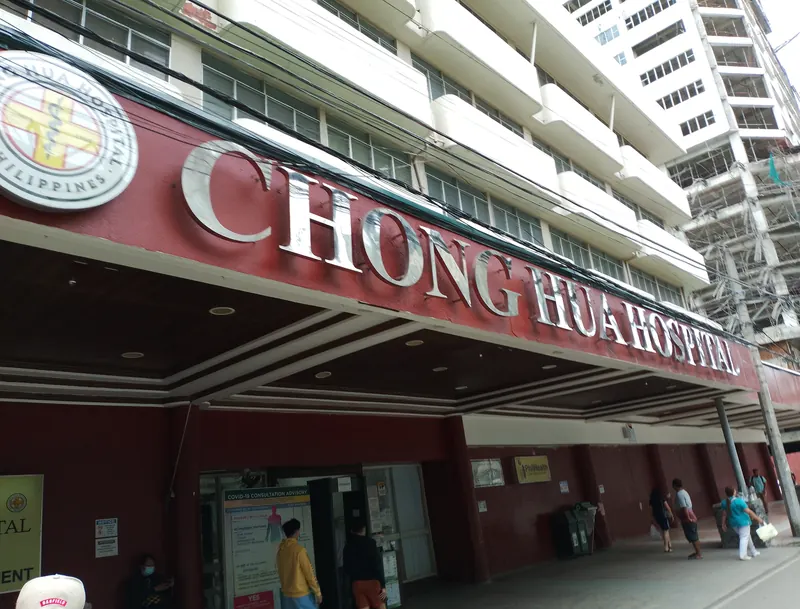
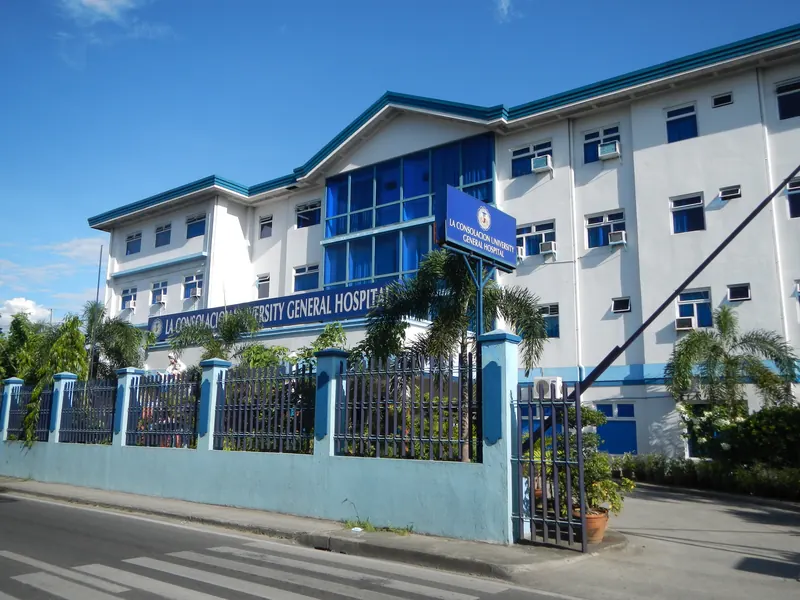
At a public hospital such as Vicente Sotto Memorial Medical Center, a case rate of this size covers most of an admission. At Chong Hua, Cebu Doctors’, Perpetual Succour or UCMed, it covers a slice. How large a slice, we will not guess: no Cebu private hospital publishes a schedule of charges, which means every “PhilHealth covers 10%” claim you read (including the one this article used to make) is somebody’s arithmetic on somebody else’s anecdote. What is certain is the direction. PhilHealth is cheap, it is real money, and it is not the layer that protects you in a private room.
HMO: prepaid access, and a rate card nobody prints
An HMO is not insurance in the strict sense. You pay an annual premium for cashless access to a network of accredited clinics and hospitals, up to an annual benefit cap. Leave the network and you pay upfront and file for reimbursement. Exceed the cap and you are self-funding.
Here is what the market will actually tell you about price. No Philippine HMO publishes an individual rate card. Premiums are generated per applicant by age band, plan tier and room limit, through a quote tool or an agent. The two figures an issuer states openly are the ends of the range, not the middle:
- MediCard Health Plus: PHP 1,545/year, inclusive of VAT. Unlimited consults with GPs, internists, paediatricians and gynaecologists at MediCard clinics, one annual physical exam, 20% off labs. No confinement, no medicines, no maternity. No age limit and no pre-acceptance medical exam.
- Maxicare PRIMA Gold: PHP 16,888, the product Maxicare’s own quote tool offers applicants aged 60 and over.
Between those poles, the previous version of this page carried tidy per-provider bands (Maxicare PHP 11,000–50,000, PhilCare PHP 5,000–40,000, and so on) sourced to nothing. They are deleted. If a comparison site shows you a band, ask it where the band came from.
What an HMO covers well: outpatient consults at network clinics, routine diagnostics, ER visits at affiliated hospitals, and moderate inpatient admissions inside the cap.
Where it stops: a catastrophic event that exceeds the annual cap; pre-existing conditions inside the waiting period; care outside the network; and chronic conditions, which commonly carry their own sub-limits.
The Cebu-specific check. Before you pay, call the HMO and confirm which Cebu hospitals accept that exact plan tier. Cebu Doctors’, Chong Hua, Perpetual Succour and UCMed hold different panel relationships with different HMOs, and a mid-tier card that works at one can have gaps at another. This is the question the brochure never answers and the call centre always will.
The age question, answered per product
The internet will tell you the HMO market closes at 60. It will also tell you 65. Both are extrapolations from single products, and the honest position is that there is no market-wide cutoff.
What is verifiable, from the issuers themselves:
- Maxicare’s individual quote tool declines its flagship HMO above 60 outright: “Sorry, MyMaxicare is not available for ages above 60,” and offers PRIMA Gold instead.
- MediCard states no age limit at all on Health Plus, and no pre-acceptance medical exam.
Two issuers, two opposite policies, same market. So the planning rule is not a number, it is a habit: get the entry age and the renewal age in writing from the issuer before you build a retirement plan around a card you assume you can still buy at 62. Our age wall guide covers what remains open after 65 and what it does to the arithmetic.
International insurance: the layer above the cap
International plans exist for the events an HMO cap cannot absorb: a long ICU stay, an oncology course, an air ambulance to Manila or Singapore when a Cebu facility cannot handle the case. They underwrite each applicant rather than imposing blanket waiting periods, which cuts both ways.
The structural features that decide the price:
- Deductible. What you pay before the insurer does. Higher deductible, lower premium.
- Co-insurance. Your share of the post-deductible cost.
- Treatment area limit. Geographic scope. An Asia-only plan is materially cheaper than a worldwide one, and a Philippines-only plan cheaper again.
- Outpatient. Excludable if an HMO already covers your day-to-day care, which is the usual reason to hold both.
- Evacuation. Air ambulance to a higher-capability hospital. For an older expat in a provincial city, this is often the clause that justifies the whole policy.
- Underwriting. Disclosed conditions are accepted, loaded, excluded by endorsement, or declined. Non-disclosure is the cleanest possible ground for a denied claim, so declare everything and buy what you are actually offered.
When a claim is refused at the counter
Cashless coverage fails at admissions for a small number of reasons, and knowing them is worth more than any premium comparison.
- A pre-existing condition still inside its waiting period. The condition was disclosed or discoverable before enrolment and the clock has not run.
- Material misrepresentation on the application. Something in your records that was not declared.
- The treatment was not pre-approved. Many plans require the HMO’s own physician to sign off on an admission or a procedure. Arriving through the ER and skipping that step is a common cause of refusal.
- A lapsed payment. The policy was active when you booked, the latest premium has not cleared, and the cashless link drops on arrival.
If you are refused, do three things that same day. Pay and get treated, keeping every official receipt, the Statement of Account, and the discharge summary, because reimbursement needs originals. File the reimbursement claim inside the window your plan publishes (it is a contract term, so read yours rather than trusting a generic figure). And if reimbursement is also denied, escalate in writing to the HMO’s member services, then to the Insurance Commission, which has regulated HMOs since Executive Order 192, s. 2015 moved jurisdiction over them from the Department of Health.
Below PHP 1,000,000, an HMO contract dispute is a small claims case, which you can file without a lawyer under the Rules on Expedited Procedures in the First Level Courts (A.M. No. 08-8-7-SC, effective 11 April 2022). It is slow and it is only worth it on a clearly documented denial, but the venue exists and it is cheap.
Dengue: the one product a Cebu household should actually price
Standard HMO plans cover dengue under the general inpatient benefit, so a dengue admission eats into the same annual cap as everything else that year. Cover is the second line of defence; the first is not getting bitten, which is a building-level problem more than a personal one (dengue prevention in a Cebu condo). For household members an HMO does not cover, two issuers sell one-time dengue cover at a price that barely registers.
| Product | Price | Cap | Terms |
|---|---|---|---|
| PhilCare Dengue Assist | PHP 599 | up to PHP 30,000 | Ages 18–65. One-time use, valid 1 year. Coverage starts 30 days after activation |
| iCare Dengue Flex (Insular Health Care) | PHP 500 | up to PHP 50,000 | Ages 21–70. Also covers leptospirosis and COVID-19. Activates 10 days after registration |
Stack that on the PhilHealth dengue case rate and a mild admission is largely funded before your HMO cap is touched. The waiting periods are the catch: buy in the dry months, not the week the neighbours’ kids get sick.
For rabies and animal-bite exposure, which is a live risk in Cebu, the question to put to your HMO is narrow and specific: is the immunoglobulin component of post-exposure treatment covered, or only the vaccine series? That is where the cost sits, and it is where plans differ.
What this page will not tell you
Three numbers that competing pages will happily give you, and that we have deliberately removed rather than re-source from each other:
- A private-hospital bill for a given procedure in Cebu. No hospital here publishes charges. We can tell you what PhilHealth pays; the other half of the subtraction is not public.
- An HMO premium range by age. No issuer publishes one.
- An international premium band by age. No insurer publishes one, and broker marketing pages are not a rate sheet.
That is three gaps, published rather than papered over. It is also the honest shape of this market, and knowing the shape is what lets you ask the right questions of the one person who does have the numbers: the underwriter looking at your file. How we date, source and retire every figure on this site is set out in our methodology, and the ledgers behind the live figures are in the data catalogue.
For Cebu hospital mechanics, see the hospitals guide and what to expect in an emergency. For where insurance sits in a monthly budget, see the Cebu cost of living guide. For enrolment pathways by visa, see visa options for Cebu, and for the first-month sequence that gets cover in place before you need it, the first-month checklist.
FAQ
Frequently asked.
Do expats need PhilHealth to live in Cebu, and what does it cost?
What does PhilHealth actually pay for in a Cebu hospital?
How much does an HMO cost in Cebu?
Is there an age cutoff for buying an HMO in the Philippines?
Does an HMO pay before or after PhilHealth?
Data note. Prices, rates, and details are verified as of publication and may change. Always confirm with the listed provider or landlord before committing. This article is informational, not financial, legal, or immigration advice. Full disclaimer.