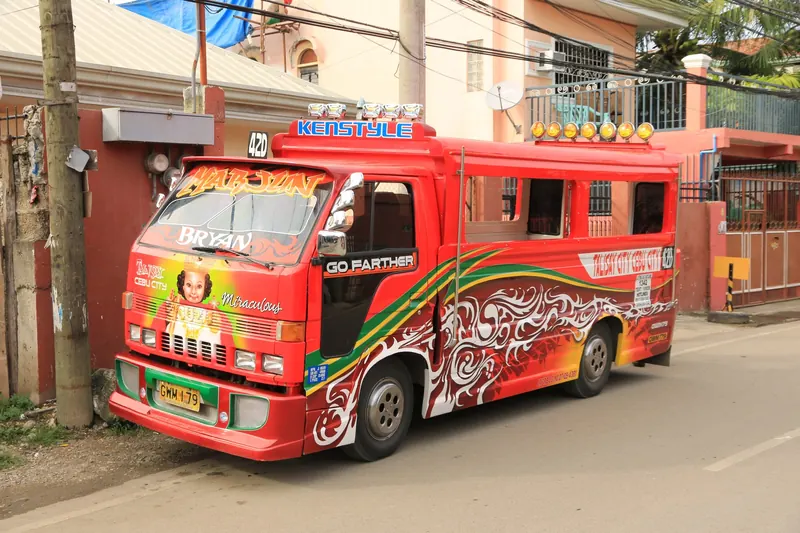
In April 2026 a foreign passenger took a taxi out of Mactan-Cebu International Airport, was quoted a flat PHP 500–₱1,000 (Apr 2026), and filmed it. The clip travelled, the regulator moved, and Cebu’s tourism office spent a week putting out a fire it should never have had to fight. None of that was new. The only unusual ingredient was the camera. The same play runs against unaccompanied foreigners every day of the year, unfilmed and uncounted.
That is the texture of expat-facing fraud in Cebu. Violent crime is uncommon, but the scams have professionalised: hotel booking pages are cloned in batches, romance fraud is run out of scam hubs holding hundreds of SIMs, and the gap between a foreigner’s expectation and the local price book gets monetised at every transactional friction point. The safety overview sketches the general shape. This piece walks the six scams you are most likely to meet, the published record behind each, and the defense.
One thing we will not do here is quote a peso figure we cannot back. Several of the numbers that usually circulate in scam guides (typical taxi meter totals, average booking losses, standard sextortion demands, the going rate for a fixer) have no source that survives a check. Where that is the case, this page says so instead of guessing. Our methodology explains why that rule exists.
1. The airport-taxi overcharge
The April 2026 case is the clean documented example, and it is worth reading as a procedure rather than as a story. The passenger filmed the exchange and complained. LTFRB-7 took the complaint on 2 April 2026, found that the driver had committed overcharging and deliberately failed to use the meter, placed the taxi unit under a 30-day preventive suspension, required the plate and the driver’s licence to be surrendered, and set a show cause hearing for 21 April at LTFRB Regional Office No. 7, with franchise revocation on the table (Cebu Daily News, 4 April 2026). The mechanism, every time: “meter broken” or “fuel price up”, then a flat quote, then a small concession if you push. The concession is the negotiation working exactly as designed.
The anchor you need is that airport taxis are a regulated, metered class. The LTFRB airport-taxi flag-down is PHP 75 (Aug 2026) for the first 500 metres, plus a charge per succeeding 300 metres and per two minutes of waiting. A higher figure of PHP 115 is circulating as the current flag-down and it is not: LTFRB approved that PHP 40 rise on 17 March 2026 for a 19 March start (Daily Tribune, 17 March 2026), the President ordered it suspended on 18 March, the day before it was due to begin, and it never took effect (Philstar, 18 March 2026). The Department of Transportation confirmed on 7 August 2026 that fare increases across public utility vehicles remain suspended (Philstar, 7 August 2026), so PHP 75 still stands. A driver citing the 2026 increase is citing an increase that was cancelled. A flat number invented at the kerb is not a fare in any sense the regulator recognises.
Defense. Take Grab, which quotes the whole trip in the app before you accept it, so the price is fixed before you get in and there is nothing to negotiate at the kerb. The regulated base fare underneath that quote is PHP 45 for a sedan, PHP 35 for a hatchback and PHP 55 for an AUV. The 17 March 2026 increase that would have lifted those to PHP 65, PHP 55 and PHP 75 was suspended with the rest of the package and never took effect. LTFRB did revive a separate fixed pick-up fare in July 2026, so the base fare is not the whole of what the app charges. Our transport costs breakdown sets out the wider fare picture. If you do take a metered taxi, watch the meter start before the car moves, and step out if it is still off after the first turn. Note the body number painted on the rear and the side. Then file with LTFRB-7 in Cebu City. The April case is proof they act on a documented complaint.
2. Cloned hotel booking pages around Sinulog
Sinulog falls on the third Sunday of January, the city fills, room rates climb, and the cloning industry runs its busiest week. The pattern is on the record: in January 2025 the Hotel, Resort and Restaurant Association of Cebu warned the public that fake Facebook accounts were impersonating member properties with the genuine logo and photos and a 50 percent room discount. Crimson Resort and Spa Mactan alone reported at least eight fraudulent pages; Plantation Bay and Mövenpick Mactan were cloned too. Guests paid in advance by GCash or bank transfer and arrived to find no booking existed. HRRAC’s line is the useful one: transact only through the official hotel or resort website, or an accredited agency.
There is no loss figure here on purpose. Neither HRRAC nor the reporting on it published an average amount lost, so this page does not carry one.
Defense. Book on the hotel’s own website (reach it by searching the hotel name, never by following a Facebook link), or on Booking.com or Agoda. Refuse any deal that wants payment to a personal GCash number or a personal bank account; a real hotel invoices from a corporate account. Treat a rate far below the hotel’s own published price as bait rather than luck. The same play runs lighter year-round around Christmas, Holy Week and long weekends.
3. Money-changer short-change
Mall and hotel-lobby kiosks (Czarina, Sanry’s, GPC and Drop-By Foreign Exchange inside Ayala Center, SM City Cebu and Robinsons Galleria) post their rates and run clean transactions. The risk concentrates at independent street-side counters advertising a visibly above-market rate. The mechanic is a recount: the operator counts the pesos correctly, you nod, they say “let me recount for you”, and during the recount a PHP 1,000 note is palmed. You find the shortfall three blocks later, by which time the counter is closed.
Your reference point should not be the rate on the board next door. It should be the BSP reference rate, which today is ₱62.49/USD (BSP RERB, 10 Sep 2026). Every currency we track sits in the PHP FX rates dataset, read straight from the BSP bulletin. A street rate that beats the reference rate is not generosity. The spread is what funds the short-change. For what the posted counters actually pay against that reference, and which ones are worth crossing town for, see Cebu money changer rates.
Defense. Work out the expected peso total on your phone before any cash leaves your hand. Count every bill yourself, across the counter, before you pocket the stack. Step away only once the total is verified.
4. Romance and sextortion
Romance fraud aimed at older foreigners is not a lone operator with a sad story. On 23 October 2025 the PNP Anti-Cybercrime Group, working with PAGCOR and the SEC, executed a warrant on an online scam hub in Malate, Manila, arresting 39 people and seizing 231 SIM cards, 200 smartphones and 36 computers (PNP-ACG). The PNP describes what it found as a multi-tiered network running romance and investment fraud with AI-assisted social engineering across social media and messaging platforms, layering the proceeds through digital wallets. Shift work, scripts and hundreds of handsets: that is the thing on the other side of the conversation.
The classic ask is a “visa process fee”, a sick relative, or a plane ticket. The uglier variant is sextortion: a video call escalates to undress, the call is recorded, and the recording is used to demand payment against a threat to send it to your family and your contacts.
Defense. Two rules cover nearly all of it. Never send money to anyone you have not met face-to-face. Never undress on camera for someone you have not known offline for months. A relationship that escalates from match to “I love you” inside two weeks is a script, not a person.
5. The BI fixer
Outside the Bureau of Immigration Cebu District Office at GMall of Cebu on A. Soriano Avenue, where the office relocated in January 2024, operators approach foreigners offering to “fast-track” ACR I-Card renewals, visa extensions and Annual Report compliance. The pitch is a shorter queue and knowing the staff. What you get is an escort to the counter you would have reached on your own.
The reason the pitch works is that the queue is unfamiliar and the fee schedule is not. So learn the fee. BI publishes its own tariff, and the visa-waiver extension that most tourists need first runs ₱3,030 (Visa waiver (initial 29-day extension, completing the 59-day initial stay), 29 days) (Philippine Bureau of Immigration, BI's published schedule, vintage 06 Mar 2014 — BI states fees "may change without prior notice") as a published total, with a subsequent regular extension at ₱2,430 (Subsequent regular extension, 1 month) (Philippine Bureau of Immigration, BI's published schedule, vintage 06 Mar 2014 — BI states fees "may change without prior notice"). Those are the numbers on the board, they include the express-lane fee already, and each one produces an official receipt with the BI seal.
The fixer’s markup, by contrast, has no published tariff, which is not an oversight on our part. It is the definition of the thing. It is cash, it is off the books, it produces no receipt, and any figure we printed for it would be fiction dressed as guidance. If a payment does not come with a BI receipt, it is not a fee. For the full sequence, see the ACR I-Card annual report walkthrough.
Defense. Walk past anyone offering help in the car park. Inside, deal only with uniformed BI personnel at the numbered counters. Pay only the posted fee, only at the cashier, only against a printed receipt. If you are asked for anything else, leave and come back tomorrow.
6. ATM skimming
Less common than the rest, and still live. A skimmer is a thin reader fitted over the real card slot, paired with a pinhole camera or a fake keypad overlay, and it turns up periodically on standalone outdoor ATMs in low-traffic spots. Mall-lobby machines attached to a bank branch get cleared by the bank’s own security. The risk concentrates at petrol-station units, machines inside small shops, and anything in a poorly lit walkway.
Defense. Use ATMs inside Ayala Center, SM City Cebu, Robinsons Galleria, the IT Park ground floors, or any BDO, BPI or Metrobank branch with a guard on the door. Cover the keypad with your other hand. Check the card slot before you insert: if it wiggles, sits proud of the panel, or is a slightly different colour, walk to the next machine.
Adjacent reading
This guide covers the scams that hit visitors and short-stay expats. Longer-term residents meet a different set: rental deposits, fake landlords and condo-viewing fraud are covered in the rental scams in Cebu walkthrough. Phone snatching, the property crime expats actually experience most, has its own prevention and recovery playbook.
The pattern under the patterns
Every scam above runs against the same gap: a foreigner assuming the system works the way it does at home, paying the price they would pay at home, accepting a document or a page or a rate that looks official at exactly the friction points where a Cebuano would already be sceptical. The airport case only produced a suspension because the passenger had a camera running. The cloned page works because it carries the real logo. The fixer works because you do not know what the counter costs, which is why the fee schedule above is worth thirty seconds of your time.
Closing the gap is mostly a matter of slowing the transaction down. Pull out your phone. Do the arithmetic. Ask one more question than feels polite. Walk away when the answer is bad. Scammers price on speed, and removing the speed removes their margin.
FAQ
Frequently asked.
What is the most common scam at Mactan-Cebu airport in 2026?
How do Sinulog booking scams work and how do I avoid them?
Should I trust money changers in Ayala Center Cebu?
Are romance scams a real risk for older expats in Cebu?
Do I need a fixer to renew an ACR I-Card or visa in Cebu?
Data note. Prices, rates, and details are verified as of publication and may change. Always confirm with the listed provider or landlord before committing. This article is informational, not financial, legal, or immigration advice. Full disclaimer.