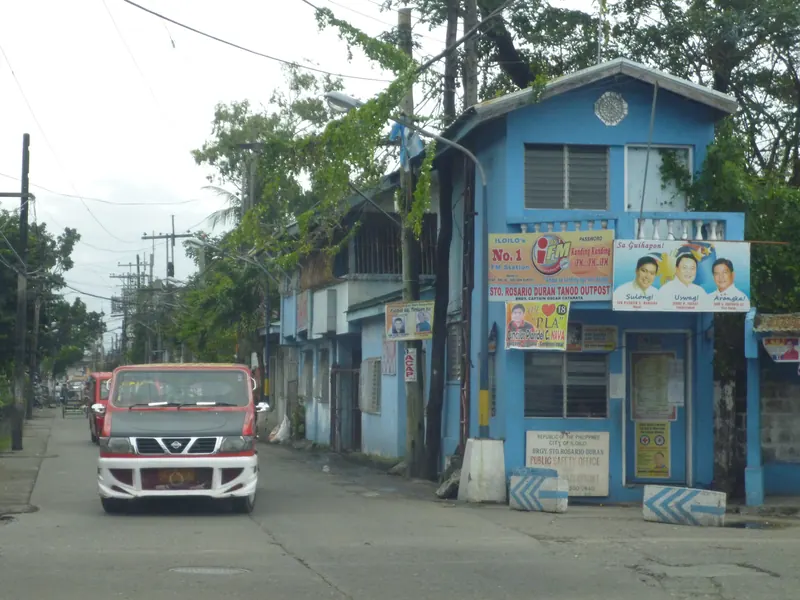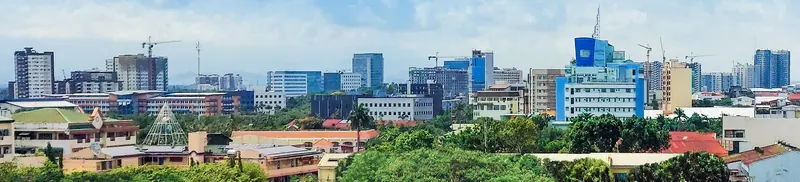
Transport in Cebu City costs ₱1,000–₱6,000/month depending on where you live and how you commute. The range is wide because a renter in IT Park who walks to work spends almost nothing, while someone in Talisay commuting by Grab to IT Park daily spends more on transport than some people spend on food.
Two things happened in March 2026 and only one of them changed what you pay. On March 17 the LTFRB approved a nationwide fare increase across jeepneys, buses and ride-hailing; on March 18, the day before it was due to take effect, the President ordered it suspended. It never landed, and it is still suspended. Six days earlier, on March 13, the Cebu Bus Rapid Transit began partial operations after years of delay, and the route it actually runs is not the one announced in the planning years.
Transport is the cost that makes or breaks your neighborhood choice. A cheaper apartment far from your workplace can cost more per month than a pricier unit within walking distance once you add commute expenses and time.
Jeepney Fares in Cebu
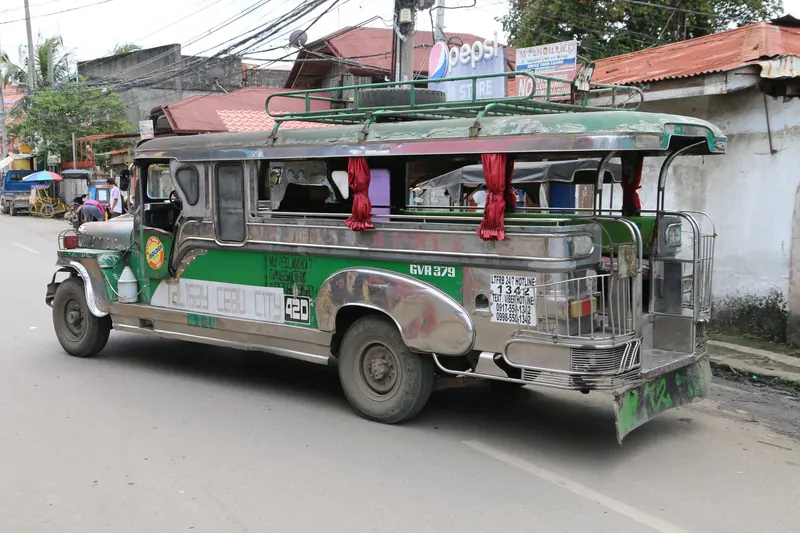
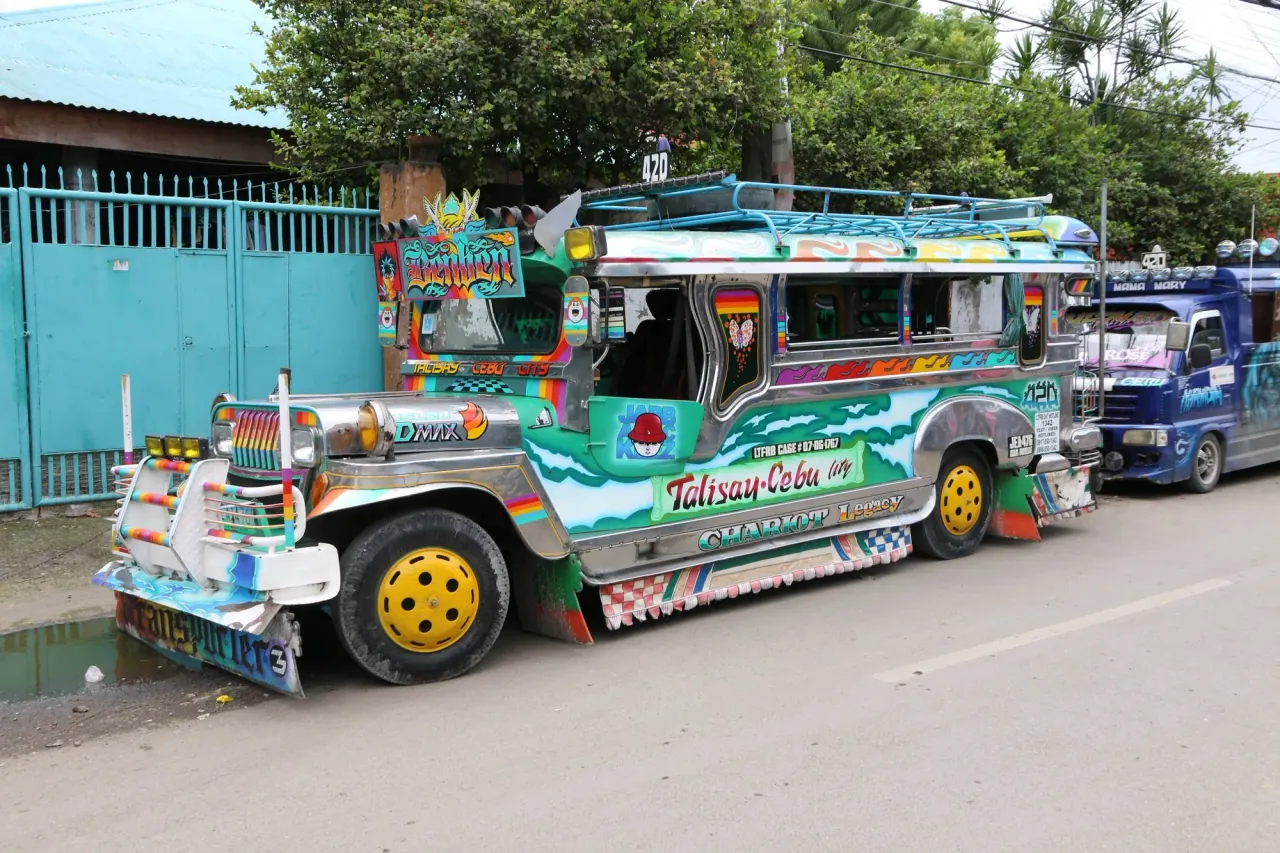
Jeepneys are still the cheapest way to move around Cebu, and the fare in force is not the one the March 2026 announcement set. The minimums below have stood since an LTFRB adjustment effective October 8, 2023. The board’s own fare-rates page is not publicly fetchable, so they come from named outlets carrying the LTFRB matrix: SunStar states both minimums and the four-kilometer basis, Philstar’s Cebu edition The Freeman corroborates them, and GMA News restated the traditional minimum as current on July 22, 2026.
| Traditional Jeepney (TPUJ) | Modern Jeepney (MPUJ) | |
|---|---|---|
| Minimum fare (first 4 km) | PHP 13 | PHP 15 |
| Per km after 4 km | PHP 1.80 | PHP 2.20 |
| Approved March 2026, suspended, never charged | PHP 14 minimum | PHP 17 minimum |
| Typical city ride (5–8 km) | PHP 15–20 | PHP 17–24 |
| Student / senior / PWD discount | 20% off | 20% off |
| AC | No | Yes |
| Payment | Cash only | Cash or beep card |
Why the higher numbers are everywhere. On March 17, 2026 the LTFRB approved an increase across jeepneys, buses, P2P buses, airport taxis and ride-hailing, to take effect on March 19. On March 18, the day before, the President ordered it suspended. It has not taken effect since, and on August 7, 2026 the DOTr confirmed the suspension still holds, with Transportation Secretary Giovanni Lopez tying it to unstable oil prices. PHP 14 and PHP 17 were published widely in the two days between approval and suspension and are still in circulation. They are out of date, and neither was ever charged.
What would change it. Two petitions sit with the board. Manibela is asking for PHP 2 on the minimum; PISTON is asking for PHP 10, which would put the traditional minimum at PHP 23. GMA News reported on July 22, 2026 that the LTFRB will recompute both and issue a final resolution, and stated in the same piece that the current minimum is PHP 13. Neither petition has been decided. If a driver quotes you PHP 14, the increase behind that number was stopped before it started.
One figure we are deliberately not printing: the succeeding-kilometer rate the suspended modern-jeepney tariff would have set. Named outlets split between PHP 2.30 and PHP 2.40, and with no fetchable regulator document we cannot settle it. It does not affect what you pay. The rate in force, PHP 2.20, is unanimous across every outlet we opened.
How jeepneys work in Cebu. Routes are fixed but not always posted. Ask the driver or other passengers whether the jeepney passes your destination. You pay when you board or during the ride, and you hand your fare forward through other passengers if you cannot reach the driver.
Common routes for expats. Using the fare matrix above, most inner-city hops land at or just above the minimum:
- Lahug/IT Park to Ayala Center: multiple routes along Archbishop Reyes Avenue and Osmeña Boulevard. Around 3 km, so the PHP 13 minimum.
- Colon/Capitol to IT Park: via Osmeña Boulevard. Roughly 4 to 6 km, so PHP 13 to 17 depending on the exact route.
- Mandaue to IT Park: via A.S. Fortuna to Gov. M. Cuenco. Around 7 km, so roughly PHP 18. Slow at rush hour.
Popular routes run every 2 to 5 minutes during the day. Service thins after 9 PM and by midnight most routes are inactive.
Cebu BRT: Where the Line Actually Runs
The Cebu Bus Rapid Transit began partial operations on March 13, 2026, and the single most useful fact about it is where it ends. It does not terminate at the Capitol. It runs Il Corso at the South Road Properties to Cebu IT Park, about 10 km, which means it serves the exact commute most BPO workers and expats care about.
Per the Cebu Daily News commuter guide, northbound trips call at Il Corso, Nustar, SM Seaside, SM Arena, Mambaling, SIT/CIT, V. Rama, the Cebu South Bus Terminal, CNU, Fuente, Capitol, Sacred Heart, Ayala South, Pag-IBIG (Ayala), Samar Loop, Negros Road, Luz, and IT Park. Southbound reverses, adding City di Mare and El Pardo.
| Cebu BRT (CBRT), from March 13, 2026 | |
|---|---|
| Route | Il Corso (SRP) ↔ Cebu IT Park, ~10 km |
| Stops | 18 northbound, incl. CSBT, CNU, Fuente, Capitol, Ayala South, Luz |
| Free-ride window | 6–9 AM and 5–8 PM (DOTr Libreng Sakay) |
| Paid fare, first 5 km | PHP 18.00 |
| Paid fare, per succeeding km | PHP 2.97 |
| Discounted minimum (student / senior / PWD) | PHP 14.40 (20% off) |
| Buses running | 17 of 30 approved units |
What is actually running. 17 of the 30 approved buses were deployed on day one, and the dedicated median lanes exist only on the completed stretch along Natalio Bacalso Avenue and Osmeña Boulevard. Everywhere else the buses sit in the same traffic you do. Buses stop only at designated stations, which caused enough confusion on the first day that the city called for a public-information push.
Practical takeaway. If your trip runs along the Osmeña Boulevard spine, the BRT is now a real option and it is free in both rush windows, which is precisely when a Grab would surge. Its weakness is not the route, it is the mixed traffic: on the uncompleted stretches it inherits the same congestion as everything else. Time it once against your jeepney before you rearrange your life around it.
How Much Does Grab Cost in Cebu
Here is the honest position on what a Grab in Cebu costs, including what we cannot tell you.
What is published: the LTFRB base fare structure. Per GMA News reporting the LTFRB schedule, a TNVS trip starts at PHP 45 for a sedan, PHP 55 for an AUV, PHP 35 for a hatchback and PHP 145 for premium, with a per-kilometer charge on top. A PHP 20 rise on each of those was part of the March 2026 package that was suspended, so it is not in your fare. One thing did change, and it is a separate charge rather than a base-fare rise: in July 2026 the LTFRB revived a fixed pick-up fare under memorandum circular 2026-059, PHP 26 for a sedan picked up within 1 km and rising to a capped PHP 130 at 5 km.
What is not published, by anyone: the price of any given Grab route in Cebu. Grab prices dynamically. There is no regulator table, no operator table, and we have not collected a fare sample. So the figures below are LiveInPH editorial estimates, and we are labeling them as exactly that rather than dressing them up as data.
| Route | Off-Peak Estimate | Rush Hour Estimate | Distance |
|---|---|---|---|
| IT Park to Ayala Center | PHP 80-120 | PHP 120-180 | ~3 km |
| IT Park to Mandaue (A.S. Fortuna) | PHP 120-180 | PHP 200-300 | ~7 km |
| IT Park to Mactan Airport | PHP 300-450 | PHP 400-600 | ~15 km |
| IT Park to Talisay | PHP 200-300 | PHP 300-450 | ~12 km |
| IT Park to Banilad | PHP 80-130 | PHP 120-180 | ~4 km |
| IT Park to Talamban | PHP 120-180 | PHP 180-280 | ~7 km |
| Within IT Park | PHP 60-90 | PHP 80-120 | ~1-2 km |
Surge pricing is the whole game. During heavy rain or the 5 to 7 PM rush, fares jump. A PHP 150 ride to Mandaue quotes at PHP 250 to 300. Two habits that pay for themselves over a month of daily rides: refresh the app once or twice before booking, since the quote can drop as nearby cars come online, and check the Vouchers tab, where discount codes appear often enough to matter.
Availability. In the city core (IT Park, Lahug, Banilad, Mabolo), cars arrive in 3 to 5 minutes. In outer areas (Talisay, upper Talamban, Mactan), waits stretch to 10 to 20 minutes and some drivers decline. Mandaue is decent along A.S. Fortuna and thins toward Consolacion.
Motorcycle taxis: Angkas, JoyRide, Move It
Three motorcycle-hailing apps operate in Metro Cebu under the DOTr Motorcycle Taxi Pilot Program: Angkas, JoyRide and Move It. Move It was the third entrant. They cut through traffic on routes like A.S. Fortuna where a car crawls, at the cost of no AC and no luggage.
On price, we will not pretend to a Cebu number we do not have. The only fetchable head-to-head is TopGear’s May 2026 comparison, which priced one identical Metro Manila trip at PHP 51 on Move It, PHP 60 on Angkas paying cash, and PHP 70 on JoyRide. That ordering is a reasonable prior for Cebu. It is not a Cebu observation, and we have not collected one.
The legal frame matters more than the peso difference. There is still no motorcycle-taxi law. The House passed its bill on third reading; the Senate counterpart has not passed, and all three platforms therefore run on a DOTr pilot program rather than a franchise. That is a provisional footing, and it is worth knowing if you plan to make one of these apps your daily commute.
Habal-habal (the unfranchised kind). Private motorcycles taking passengers for a fee sit outside any LTFRB franchise, and enforcement is patchy. In 2026 Mandaue City moved to standardize habal-habal fares across its 27 barangays after complaints that identical trips were being priced differently. The agreed rule, as reported by the Manila Times, is a uniform minimum of PHP 25 with only PHP 2 to 5 added depending on distance and fuel cost, with terminals asked to post their fare matrix on a tarpaulin. Note what that is: a local-permit workaround, not national legalization, and no city-wide peso matrix for longer distances has been published. Outside Mandaue, fares are negotiated. Agree the price before you get on.
MyBus: Fixed Routes, No Published Fare Table
MyBus runs air-conditioned buses on fixed routes across Metro Cebu, including the airport link that most newcomers want: IT Park to Mactan Airport, departing hourly from around 6:40 AM to 8:40 PM, with the return running from about 7:00 AM to 10:00 PM.
The fare is where we have to be careful. MyBus publishes no fetchable fare matrix, and neither does the airport. The airport route is consistently reported at PHP 50 and shorter city routes at PHP 25 to 50 by distance, but those figures come from travel blogs rather than the operator, so we register them as unverified rather than pass them off as a tariff. What holds regardless: MyBus is several times cheaper than a Grab on the same airport run, and it takes a beep tap.
The trade-off is the one every fixed-route service has. No door-to-door, a fixed schedule, and the IT Park stop may not be next to your building.
Renting or Owning Your Own Ride
The mode this guide’s fare tables don’t cover is the one most long-term expats end up on: their own motorbike. Once you are past the daily-Grab phase, a scooter is the cost and freedom break-even. It kills the surge tax, the 10 to 20 minute outer-area waits, and the A.S. Fortuna crawl in one move.
The figures below are LiveInPH editorial estimates from the Cebu rental and used market. They are not a published price list and no dealer publishes one, so treat them as a starting negotiation position rather than a quote.
- Scooter rental: roughly PHP 350–PHP 500/day short-term, dropping to about ₱5,000–₱8,000/month on a monthly deal from the shops along Osmeña Boulevard and the Mactan rental cluster. At the BSP reference rate of ₱62.49/USD (BSP RERB, 10 Sep 2026), that monthly band is roughly USD 81 to 130. Fuel for a 125cc runs PHP 400 to 800 a month at typical city use, cheaper than a single week of Talisay-to-IT-Park Grab.
- Buying secondhand: a serviceable used 125–155cc scooter runs PHP 50,000 to 80,000. The math beats year-one rental if you are staying 12 months or more and do not mind registration and the occasional repair. The full motorbike ownership cost breakdown covers eligibility, dealers, parking, insurance and the real monthly TCO.
- Car: few expats keep one in the core. Parking is scarce and unbundled, and it makes sense mainly for families or anyone based in Talisay, Mactan or the suburbs.
The license catch most newcomers miss. A foreign driver’s license is valid for 90 days from your date of arrival, and a car license does not let you legally ride a motorbike, since you need the motorcycle category. Past day 90 you need a Philippine license: a still-valid foreign license converts directly, while an expired one puts you through the theoretical course and the practical test as a new applicant. The LTO license conversion for foreigners in Cebu walks the exact process, restriction codes and costs. Riding on day 91 is the kind of thing that turns a routine checkpoint into a problem.
Beep Card and Cash: Which Mode Takes Which
Payment rules differ by mode, which matters more now that the BRT is running and modern e-jeeps are spreading.
| Mode | Cash | Beep card / tap | GCash / e-wallet |
|---|---|---|---|
| Traditional jeepney (TPUJ) | Yes — hand forward | No | No |
| Modern jeepney (MPUJ / e-jeep) | Yes | Yes (beep tap) | Varies by operator |
| MyBus | Yes | Yes (beep tap) | No |
| Cebu BRT (CBRT) | Yes, outside the free windows | Not confirmed | Not confirmed |
| Grab / Angkas / JoyRide / Move It | Select drivers | No | In-app only |
| Habal-habal (traditional) | Cash only, negotiated | No | No |
Beep cards load at SM terminals, 7-Eleven stores and through GCash cash-in partners. For a daily commuter on MyBus or a modern jeepney the tap beats fumbling for exact change, and the card is transferable between household members.
Traffic Bottlenecks: Where Commutes Die
Cebu traffic is predictable in its misery. The same stretches slow at the same times every day, and knowing them is how you pick a neighborhood.
A.S. Fortuna Street, Mandaue. The worst bottleneck in Metro Cebu. This commercial strip connects Mandaue to Cebu City and carries a major route from IT Park toward Mactan. In the 5 to 7 PM rush, a stretch that takes 15 minutes off-peak takes 45 or more. Mandaue renters commuting to IT Park absorb an extra hour a day here. Price that into the rent saving before you sign.
Mandaue-Mactan bridges. The old bridges and CCLEX funnel Mactan-bound traffic through Mandaue. Living in Mactan and working in Cebu City means crossing this twice a day.
Banilad-Talamban corridor. Near Gaisano Country Mall, traffic stacks during school hours and evening rush. IT Park to Talamban goes from about 20 minutes off-peak to 35 or 40 at rush.
Osmeña Boulevard and Colon. Downtown is dense and slow, and parking is nonexistent. This is also the corridor the BRT now runs, which is the one structural improvement on this list.
SRP to IT Park. The South Road Properties corridor is growing, but the connection through Cebu City proper creates 30 to 60 minute commutes at rush. Talisay residents feel this most, and the BRT’s Il Corso terminus is the first credible alternative they have had.
The Commute Cost Math: Why Location Beats Rent
This is the math that decides where you should live. A cheaper apartment in an outer area can cost more per month than a pricier unit near your workplace once transport is counted.
| Category | Range | Notes |
|---|---|---|
| IT Park / Lahug (walking) | ₱0–₱500 | Occasional Grab only |
| Mabolo (walking / short Grab) | ₱500–₱1,500 | 10–15 min walk to IT Park |
| Banilad (jeepney / Grab) | ₱1,500–₱3,000 | Jeepney at the PHP 13 minimum, or Grab |
| Mandaue (jeepney / Grab) | ₱2,000–₱5,000 | Cheap by jeepney, but 45 min at rush |
| Talamban (jeepney / Grab) | ₱1,500–₱4,000 | 20–40 min depending on traffic |
| Capitol / Colon (jeepney / BRT) | ₱1,000–₱2,000 | Frequent jeepneys; BRT free in rush windows |
| Talisay (Grab mostly) | ₱4,000–₱8,000 | No direct jeepney; BRT from Il Corso is new |
| Mactan (Grab / MyBus) | ₱3,000–₱7,000 | Bridge crossing adds time and cost |
| Monthly transport | ₱13,500–₱31,000 |
The pattern holds even though the figures are estimates: every extra kilometer between apartment and workplace costs roughly PHP 500–₱1,500/month in round-trip expense across 20 workdays. Rent savings from living farther out are eaten by transport within 3 to 5 km of extra distance.
The time cost is harder to price. An hour each way from Talisay or Mactan at rush hour is two hours of your day. Over 20 workdays that is 40 hours a month, on top of the fare.
For a worker earning PHP 18,000 to 25,000 a month, transport at PHP 4,000 to 8,000 is 20 to 40 percent of gross. Living within walking distance of IT Park is not a luxury at that income. It is a budget necessity. The PHP 20,000 to 30,000 monthly budget guide runs the scenarios by tier.
How We Sourced This
Fares here are sourced, or they are labeled as estimates. Nothing in between.
- Sourced: the LTFRB jeepney and TNVS fares in force, and the March 2026 increase that was approved and suspended before effectivity (SunStar, Philstar and The Freeman, GMA News); the CBRT route, stops, free windows and fare (Cebu Daily News, SunStar Cebu); the Mandaue habal-habal minimum (SunStar, Manila Times); the 90-day foreign-license rule (LTO). Every fare figure here is named secondary reporting: ltfrb.gov.ph returns 403 to automated fetch and publishes no retrievable matrix, so none of these is a regulator document.
- Not sourced, and cut: the succeeding-kilometer rate the suspended modern-jeepney tariff would have set, because named outlets split between two figures and no regulator document was retrievable to settle it.
- Not sourced, and labeled: every Grab route price, the MyBus fares, the scooter rental and purchase bands, and the monthly neighborhood budgets. No regulator or operator publishes them and we have not collected a sample. They are editorial estimates.
- Live: the peso-per-dollar figure is read from our FX rate ledger at build time, from the BSP Reference Exchange Rate Bulletin, so it cannot silently drift.
Our methodology sets out how we treat this distinction across the site, including why we would rather publish a gap than a confident number nobody can check.
If you are weighing driving yourself against all of the above, the Cebu road-risk guide prices that decision in risk rather than pesos. For the full monthly picture, the cost of living guide ties transport into rent, utilities and food, and the hidden costs of renting guide shows how transport widens your real housing line. If you are still narrowing by area, the IT Park and Lahug guide maps which buildings put you inside walking range.
FAQ
Frequently asked.
How much is jeepney fare in Cebu City in 2026?
Is the Cebu BRT worth using yet?
How much does Grab cost in Cebu City?
Can I ride a motorbike in Cebu on my foreign license?
How much should I budget for transport in Cebu?
Data note. Prices, rates, and details are verified as of publication and may change. Always confirm with the listed provider or landlord before committing. This article is informational, not financial, legal, or immigration advice. Full disclaimer.