The pattern looks the same every time. A pedestrian stops near the kerb on a busy road to check a map prompt. A motorbike travelling with traffic slows to walking pace, the pillion passenger leans out, the phone is gone, the bike accelerates into the next gap. Total elapsed time: under two seconds. There is no chase, because there is nothing to chase.
The good news is that the crime is narrow. A motorbike snatch needs three things at once: a target standing within arm’s reach of moving traffic, a phone held visible to the street side, and an exit the bike can clear before anyone reacts. Remove any one of the three and the attempt does not get made. Almost everything below is about removing the first two, because they are the ones you control.
What the police data actually says, and what it does not
Start with the limits, because they decide how much weight the counts can carry.
The Cebu City Police Office reports crime counts at city level, across eight focus crimes: murder, homicide, physical injury, rape, robbery, theft, carnapping, motornapping. The direction of travel is down. The Freeman reported in October 2025 that CCPO logged 3,678 index and non-index cases from January to September 2025 against 4,843 in the same window of 2024, a 24.1 percent fall. Enforcement pressure is visible too: Cebu Daily News reported that a Safer Cities Initiative push over roughly 48 hours on 11 and 12 April 2026 produced 1,152 arrests for violations and PHP 294,000 in collected fines. Both are police figures relayed by named Cebu newsrooms, not primary PNP releases; we flag that rather than dress them up.
Now the gaps, stated plainly:
- There is no snatching series. Snatching is folded into theft and robbery. No published dataset separates “phone taken from a pedestrian by a rider” from any other theft.
- There is no hotspot map. CCPO publishes nothing at barangay or street level that a resident could check. Any ranked list of Cebu snatching hotspots, including ones that look authoritative, is anecdote with a table around it.
- We could not verify a full-year 2025 city total at source. Year-end figures circulate, and they do not agree with each other. Rather than pick the one we like, we publish the gap. See our methodology for why an unverified number is not allowed to become a fact here, and the data catalog for the series we do stand behind.
That leaves the honest thing to describe: not where the crime is, but what it needs.
Read the kerb, not a hotspot list
Because no hotspot data exists, use the physical test instead. It is more reliable than a list anyway, and it travels: it works in Mandaue, in Manila, in Bangkok.
Three conditions, all of which you can see from where you are standing:
- No barrier. The sidewalk meets the traffic lane with nothing between them: no railing, no parked cars, no planting strip. If you can be reached from a moving vehicle, you are inside the geometry.
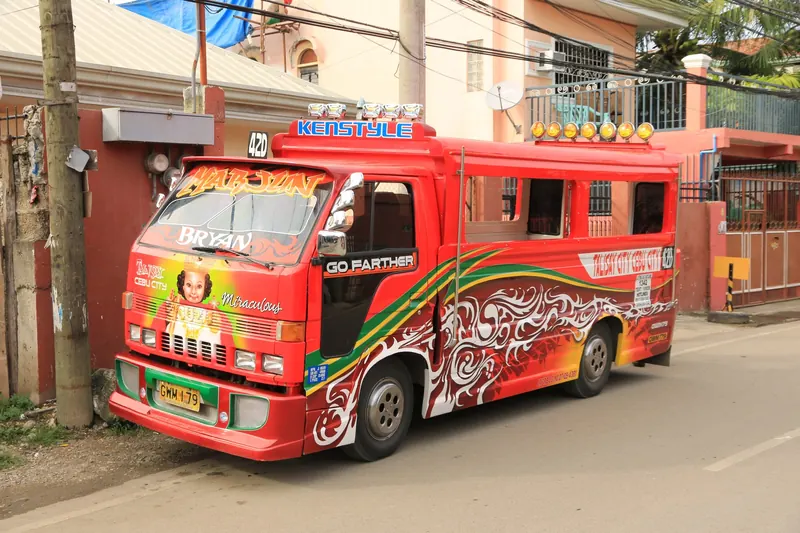
- A reason to stand still. Jeepney stops, crossings, queue lines, hospital and mall gates, the pause where you check which way to go. Standing still with a phone out is the posture the crime is built for.
- A clean exit. A road where a bike can be three blocks away before anyone finishes turning their head.
Central Cebu’s older arterials supply all three by construction, not by reputation. Osmeña Boulevard, General Maxilom Avenue, Mango Avenue, the Colon grid, and the A.S. Fortuna corridor in Mandaue are kerb-tight, pedestrian-heavy, and continuous. That is a description of road design, not an accusation about a neighborhood, and none of them is a no-go area. They are no-scroll zones.
The inverse also holds and is easy to see. IT Park and Lahug, Cebu Business Park around Ayala Center, and Mactan Newtown are estates: interior walkways set back from traffic, private security in sight, foot traffic at every hour. The geometry simply is not there. You will see people walking at 2 AM with a phone in hand, and they are not being reckless; the road cannot reach them.
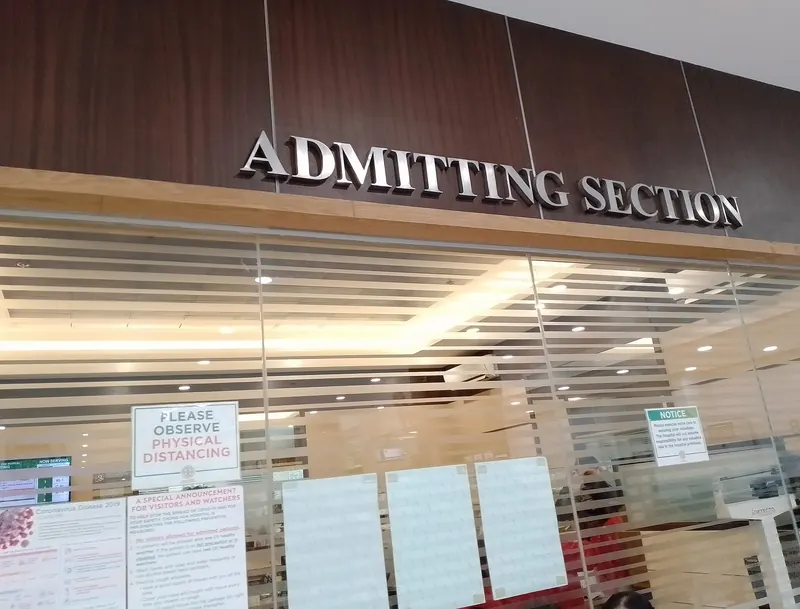
Hospital and mall gates are the case people miss, because they feel like safe ground. You are outside the gate, on the phone to family, standing still, one metre from the drop-off lane. That is all three conditions. Take the call inside.
The six behaviors that close the opening
None of these needs equipment beyond a strap.
- Never scroll within arm’s reach of traffic. Step two paces back from the kerb before you unlock. The rider needs proximity; deny it and there is no crime to commit.
- Phone in the front pocket between uses, not in the hand. A phone in the hand is an advertised object. A phone in a pocket is not in the threat model.
- Wrist strap or lanyard. The attempt does not vanish; it stops paying. A snatch is a clean handoff at speed, and a tether is exactly what a clean handoff cannot survive.
- Walk the inside lane. On a busy road, take the building side of the sidewalk, never the kerb side. Two metres of separation is the whole mechanism.
- At jeepney stops: board first, scroll later. Standing at the kerb reading the route is the target posture, held for as long as it takes a bike to arrive. Get on, then look.
- After dark on the kerb-tight corridors, take the car. Not because those roads are lawless, but because at night you cannot see who is slowing behind you. A Grab across town costs a rounding error against a phone.
If your phone is taken
The grab takes two seconds. Recovery takes an afternoon, and it is a paperwork exercise, not a manhunt. Do all three tracks the same day.
1. Police blotter. File at the nearest Police Community Precinct. For IT Park and Lahug, that is PCP 4 (Mabolo), on Jose Maria del Mar Street inside IT Park itself. Bring a valid ID. The blotter is free, and every step after this asks for it.
2. IMEI block with the NTC. File with the National Telecommunications Commission at ntc.gov.ph or through its 24/7 hotline, 1682. The NTC’s published requirements are a notarized Affidavit of Ownership and Loss with Undertaking (Form No. NTC 1-24), proof of ownership showing the IMEI (the receipt, the warranty card, or the box), and a valid government ID. A notary near the city hall or along Osmeña Boulevard will swear the affidavit the same day.
Two honest caveats. First, the NTC states in its own public replies that it cannot identify, track, or trace a lost handset, and that its role is to relay the report to the telcos, who do the actual blocking. Second, the NTC publishes no processing time for a block. Explainer pages quote a few business days; that figure is not on the NTC’s own requirement sheet, so we are not going to print it as fact. File it anyway: it costs nothing, it attacks the handset’s resale value, and it is the record everything downstream is built on.
3. Kill the SIM, then the accounts. Call your telco and block the SIM before anything else can intercept an SMS code: Globe 211 from a Globe number, Smart *888, DITO 185. That request runs on a statutory clock rather than on the carrier’s goodwill. Section 6 of RA 11934, the SIM Registration Act, provides that “in case of loss of the SIM, death of the end-user, or any request for deactivation, the end-user shall immediately inform the PTE”, and that “the concerned PTE shall deactivate said SIM within twenty-four (24) hours from the report”. Twenty-four hours is the outer limit, in law, and it is worth saying on the call. Then open Find My iPhone or Find My Device from any browser, put the handset in lost mode, and wipe it if it held anything sensitive. Rotate the Apple and Google passwords in the same hour, and check which banking and wallet apps were signed in. The phone is gone; the accounts do not have to be.
On insurance, expect less than you think. Travel policies and card-linked cover usually cap mobile-device claims well below replacement value, depreciate the handset, and require both the blotter and the block as evidence. Caps and exclusions vary by policy, so read yours before you need it rather than trusting a number you read on a blog, including this one.
| Source | What we asked it | Result | Date checked |
|---|---|---|---|
| Cebu City Police Office via Philstar / The Freeman | a Cebu City crime series broken out by offence type | Found CCPO publishes index and non-index totals and a year-on-year direction. Theft and robbery are not separated into snatching, and no street or barangay breakdown appears | |
| Philippine National Police | a national or regional snatching statistic | Not published PNP publishes crime volume and clearance rates at national and regional level. Snatching is not a reported offence category in any release we could open | |
| National Telecommunications Commission | the number of IMEI block requests filed, or a processing time | Not published the requirement sheet is published in full. No volume figure and no processing time appears on it, which is why this page prints neither | |
| Cebu City Safer Cities initiative via Cebu Daily News | enforcement figures for the anti-street-crime drive | Found operation counts, arrests and fines are published. They measure enforcement activity rather than offence incidence, and the two are not interchangeable |
- Found
- the source published the figure
- Not published
- the source exists and does not publish this figure
The take
Cebu is not a city where phone snatching is unavoidable. It is a city where one posture, phone visible in hand while standing still at the edge of a busy road, supplies almost the entire opportunity. Nobody publishes the hotspot map you would like to have, so read the kerb instead: barrier, standstill, exit. Change the posture, strap the phone, take the car after dark on the tight corridors, and the risk settles at about what it is in any large Southeast Asian city.
FAQ
Frequently asked.
Does anyone publish a phone-snatching hotspot map for Cebu?
How do I report a stolen phone in the Philippines?
How long does an NTC IMEI block take, and does it work?
Does a phone strap actually prevent snatching in Cebu?
Should I take a Grab instead of walking in Cebu at night?
Data note. Prices, rates, and details are verified as of publication and may change. Always confirm with the listed provider or landlord before committing. This article is informational, not financial, legal, or immigration advice. Full disclaimer.