You land at Mactan, install GCash to settle a Grab from the airport or split a bill, and the verification flow stalls on the ID step. A US, UK, or Australian passport will not pass the standard wallet. GCash KYC is built around Philippine government IDs, and for a resident foreigner that means an ACR I-Card, SRRV ID, Alien Employment Permit, DFA-issued ID, or a Philippine driver’s licence. Five documents, none of them issued to a tourist.
The exception is GTourist, a 30-day wallet for travellers with a US (+1) mobile number. It validates a foreign passport with a selfie, activates only after you land, and switches itself off after 30 days. Those terms come from GCash’s Help Center, which returns HTTP 403 to any automated checker, so we could not re-confirm them at the source on 12 July 2026; check the in-app flow before you rely on them. Tourists from the UK, EU, Australia, Canada, and the rest of Asia get rejected by the same automated KYC loop residents hit on the standard flow.
The wallet matters because Cebu runs on it. Grab drivers prefer it. Carinderias, sari-sari stores, and the lola selling bibingka at Capitol all take GCash QR. Landlords in Mabolo and Banilad expect rent through it. This is the practical guide: which IDs work, what the tier caps mean for an expat budget, what the July 2026 fee collapse changed, and why a top-up that worked last month silently fails this month.
What you actually need to open one
Resident registration is three things: a Philippine SIM, a government-issued ID from a closed list, and a selfie liveness check.
The SIM is non-negotiable. Under the SIM Registration Act (RA 11934), every prepaid SIM must be registered to a named holder, and GCash anchors a resident wallet to a registered Globe, Smart, or DITO number. Mactan airport kiosks, 7-Eleven, and the Globe and Smart stores at Ayala Center Cebu will sell and register one against your passport.
For ID, the resident flow accepts five documents: ACR I-Card (Bureau of Immigration, by far the most common), SRRV ID (Philippine Retirement Authority), Alien Employment Permit (DOLE), DFA diplomat or consul ID, and a Philippine driver’s licence (see the LTO conversion guide).
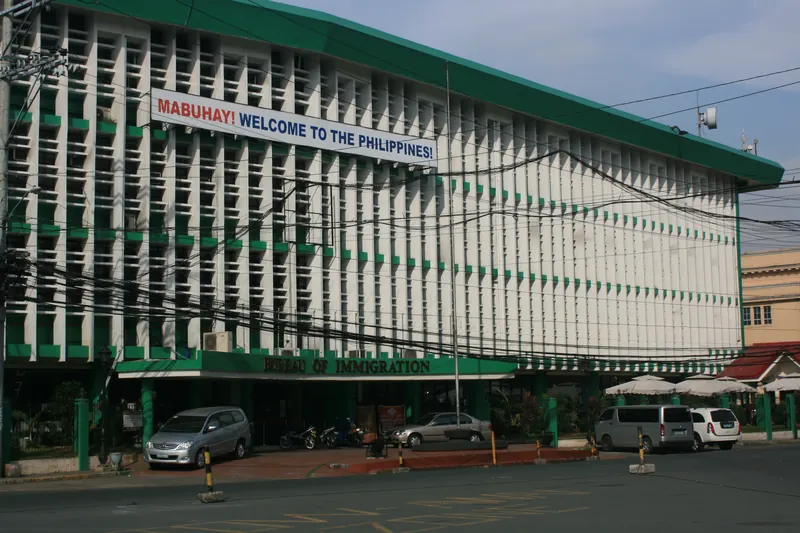
A UK, EU, Australian, or Canadian visitor locked out of GTourist is not stuck permanently. The Bureau of Immigration issues an ACR I-Card to any foreign national, tourist-visa holders included, whose stay runs past 59 days, and that card is first on the list above. The working sequence is: land, run whatever limited wallet the app gives you for small Grab and QR payments, extend your tourist visa past the two-month mark, collect the ACR I-Card, then complete full verification with it. That is the only route to the resident wallet for a non-US visitor in 2026.
When verification stalls
The automated check is where most foreigners lose a week. Three failure patterns dominate, and all three are fixable:
- Glare on the ID. Shoot the card flat, in shade, with no plastic sleeve. A single specular highlight across the photo area is enough to fail the match.
- A blurry first liveness frame. The model grabs early frames. Hold still before you start, not after.
- A foreign-passport rejection loop even with “Foreigner” selected. This is the one that feels arbitrary, because it is: the passport is not on the accepted-ID list at all, so the automated flow has nothing to match against.
The fallback is a manual ticket through the GCash Help Center under the account-verification category, with clear photos of the ID front and back attached, and it is the only path that a human ever sees. Budget several days rather than several minutes, and do not open a second ticket while the first is open, which resets your place in the queue.
Tier limits and what they mean for an expat budget
GCash publishes a tier ladder. The two tiers that matter to a foreign resident are Fully Verified, the default after a successful KYC pass, and GCash Plus.
| Tier | Wallet hold | Monthly incoming | Daily outgoing |
|---|---|---|---|
| Basic | PHP 10,000 | PHP 5,000 | PHP 5,000/month |
| Fully Verified | PHP 100,000 | PHP 100,000 | PHP 100,000 |
| GCash Plus | PHP 500,000 | PHP 500,000 | PHP 100,000 |
| GCash Platinum | PHP 1,000,000 | PHP 1,000,000 | PHP 500,000 |
Plus is the realistic ceiling for a foreign resident. A pension landing at PHP 80,000 to PHP 120,000 a month saturates the Fully Verified incoming cap on the first remittance of the month, and any rent above PHP 100,000 (a 1BR in the IT Park towers, say) needs the larger hold to sit in the wallet at all.
Plus unlocks in one of three ways: link a BPI, UnionBank, or Payoneer account; hold a balance in GSave or GInvest; or build repayment history on GLoan. The linked-bank route is the one most expats end up on, because they need the bank anyway.
The daily outgoing cap is the one that actually bites. It sits at PHP 100,000 on Fully Verified and it does not rise on Plus, so a two-month deposit plus first month, standard in Banilad and Mabolo, cannot go out in a single day regardless of tier. Split it across two days, or pay one leg by bank transfer.
The OTP moved into the app
Anything you read about GCash SMS codes written before mid-2026 is out of date. The operator announced on 16 June 2026 that in-app OTPs, delivered as push notifications inside the authenticated app, would roll out from 22 June 2026 in place of SMS codes, and framed it as compliance with BSP Circular No. 1213 and the Anti-Financial Account Scamming Act (RA 12010).
Three things follow for a foreigner:
You still need the Philippine SIM. The SIM is the registration anchor and the account-recovery channel; it just is not the code channel any more.
Roaming stops being the failure mode it was. The old trap, arriving in Cebu with a Philippine number you cannot receive SMS on, is largely gone if you can get the app online.
Losing the phone is now worse, not better. The authentication factor lives inside the installed app. Keep your recovery details current before you need them.
What has not changed is who carries a loss. Circular 1213 requires institutions handling high volumes of online transactions to adopt strong authentication, and RA 12010 makes an institution liable for restitution where it failed to employ adequate controls. That safe harbour turns on a determination by the BSP, and the BSP has published no list of compliant institutions. If you approve a transfer yourself to a scammer, nothing in AFASA plainly moves the loss off you. We work through that in the GCash scams guide.
What it costs to move money in and out
July 2026 rewrote this section. BSP Circular No. 1238 (2026) amended the retail-payments pricing framework in principles-based terms, requiring institutions to justify fees and to pass the recipient the full amount. It set no price cap. What followed was a wave of independent repricings, each on its own date, which BSP now tracks on its fee-disclosure sheet.
The practical result, as of the 10 July 2026 sheet:
| Sending from | Individual InstaPay send fee |
|---|---|
| BPI | free (from 01 Jul 2026; BSP fee disclosure, 10 Jul 2026) |
| BDO | free (from 09 Jul 2026; BSP fee disclosure, 10 Jul 2026) |
| Metrobank | free (from 09 Jul 2026; BSP fee disclosure, 10 Jul 2026) |
| UnionBank | free (from 07 Jul 2026; BSP fee disclosure, 10 Jul 2026) |
| Security Bank | free (from 10 Jul 2026; BSP fee disclosure, 10 Jul 2026) |
| PNB | free (from 10 Jul 2026; BSP fee disclosure, 10 Jul 2026) |
| GCash (sending out) | ₱10 (from 04 Jul 2026; BSP fee disclosure, 10 Jul 2026) |
| Maya wallet | ₱10 (from 06 Jul 2026; BSP fee disclosure, 10 Jul 2026) |
Every figure in that table is read live from our InstaPay fee ledger at build time rather than typed into this page, because the correct answer changed four times in the first ten days of July. How we track and date a moving figure like this is set out in our methodology. Two rules survive the churn:
There is no such thing as “the” InstaPay fee. It is a property of the sending institution, not of the rail. Any article that gives you one number is wrong on its face, including ours before this update.
Receiving is free. That holds across every institution on the BSP sheet, and GCash separately publishes free receipt of inbound international remittances. The cost of getting money from abroad into your Cebu wallet sits entirely in the sending rail, which is a different question and one we cost out in the remittance corridor guide.
The hard ceiling is structural rather than commercial: InstaPay carries a maximum of PHP 50,000 per transaction, per BSP’s own InstaPay fact sheet. That is a rail limit, not a GCash limit, and no tier upgrade lifts it. A PHP 120,000 move is three transfers whatever your wallet says.
Why your top-up just failed
Returned funds usually post back within one to two business days.
Two claims this article previously made have been withdrawn rather than restated: a fixed Sunday 02:00 to 06:00 maintenance window on InstaPay and PESONet, and a BSP requirement that the sender’s name match the receiving wallet’s registered name. Neither could be sourced to BSP or to GCash. Scheduled downtime is real, but it is announced per-institution and we will not publish a schedule we cannot cite.
When to skip GCash entirely
GCash is the right rail for daily spending, Grab, food delivery, QR at the palengke, and rent under the daily cap. It is the wrong rail for three things.
Moving a pension. Route foreign currency through a low-margin corridor into a peso bank account, then pull a monthly budget into the wallet from there. At the BSP reference rate of ₱62.49/USD (BSP RERB, 10 Sep 2026), a 2% FX margin on a USD 3,000 monthly pension costs about PHP 3,750 a month, which dwarfs any transfer fee on this page. The margin is the cost; the fee is a rounding error. See receiving a pension in Cebu, and the peso FX series the rate above is read from.
A property deposit. Use a manager’s cheque or a bank transfer. GCash transfers are irreversible, the daily cap makes a large payment a multi-day exercise, and a developer will want bank-traceable funds anyway.
Savings. This is the one that gets misreported constantly. GSave, GCash’s in-app savings product run with CIMB, pays 2.3% p.a. (gross) (CIMB Bank PH FAQ — GSave account interest rate (base cut to 2.30% p.a. effective 1 June 2026), 01 Jun 2026). Maya’s savings base rate is 3% p.a. (gross) (Maya High-Interest Savings page, 01 Apr 2026); the eye-catching double-digit numbers you see quoted for Maya are conditional promo boosts, applied to a capped first slice of the balance and contingent on completing app missions, not a rate on your money. Neither is a place to hold a year of living expenses. The digital bank comparison works the post-tax arithmetic properly, and the Maya vs GCash piece takes apart the boost ladder.
Most Cebu expats end up with the same stack: a peso bank account for the pension to land in, GCash for merchant QR and rent, and a separate deposit product for anything they are not spending this quarter. GCash is the spending layer. It was never the savings layer, and nothing about the July 2026 fee cuts changes that.
FAQ
Frequently asked.
Can a tourist open a GCash account in the Philippines?
What are the GCash wallet limits for a Fully Verified account in 2026?
What does it cost to move money into GCash in July 2026?
Why does GCash say my bank top-up failed?
Does GCash still send OTPs by SMS?
Data note. Prices, rates, and details are verified as of publication and may change. Always confirm with the listed provider or landlord before committing. This article is informational, not financial, legal, or immigration advice. Full disclaimer.